






























The French Catholic surgeon Maurice Bucaille follows in the footsteps of his famous compatriot St. Thomas Aquinas who embraced Averroes's hostility to the Hebrew Bible and anticipated the time when the Biblical geocentrism will be replaced by an astronomy in which houris materialized from the Ocean of Ether will be waiting for juvenile suicide bombers declared martyrs by Y. Arafat. Monsieur M. Bucaille proclaims that the Noble Qur'an prophecies the Big Bang theory, space travel and other contemporary breakthroughs, and that “there are more than 1200 verses which can be interpreted as the inspiration for modern science. Similar thinking induced the well-known French author and communist propagandist, a close friend of the late cardinal J.M. Lustiger's to convert to Islam and to organize an international Holocaust-denial conference in Damascus (Daily News, may 28, 2001)
Let me remind here that Napoleon Bonaparte, following his victory at Abukir, informed the disappointed sheiks that he was a “true Muslim”, that he hated Christians, even more than St. Thomas Aquinas and that he abjured his former faith. The propaganda about the Scientific Miracles of the Quran matches similar propaganda about the Scientific Miracles allegedly contained in Virgil's Georgics.
In WikiIslam you can find the article titles NATVRAE MIRABILIS ORIGINISQVE DIVINAE GEORGICAE VERGILII ‘On the Miraculous Nature and the Divine Origin of Virgil’s Georgics’ . But the attached note warns you that “this article is written as part satire, and in part to demonstrate how ludicrously easy it is to prove that any ancient poetry can be reinterpreted to reveal 'scientitic miracles'. Neither Bob nor Spinoza have converted to Greco-Roman Polytheism... Yet.
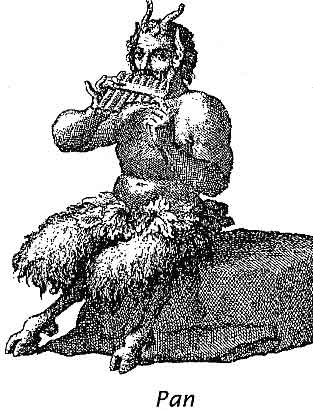
Virgil himself in the GEORGICA writes of Ceres, the goddess of grain and agriculture, Aristaeus, the planter of groves, Bacchus the god of wine, the goddess Minerva ‘the bringer of the olive’, Pan ‘guardian of the flocks’ and Jupiter (Zeus, ζευζ ) the supreme ruler of the universe. So, logically, Virgil heliocentrism would suggest that that these ancient deities were the transmitters of knowledge that science would only confirm many centuries later. Virgil's source of inspiration were the Sibylline books which, according to tradition emanated from a Sibyl or trance-medium at Cumae, near Naples (Cp. “they were all filled with the Holy Spirit in the shape of tongues of fire).
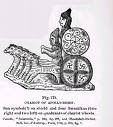
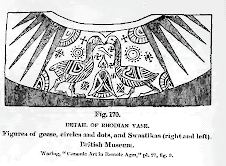
The frontispiece of the book The Migration of Symbols by Count Goblet d’Alviella is a representation of Apollo, from a vase in the Kunsthistorisches Museum of Vienna; on the middle of Apollo’s breast there is a large and prominent swastika. The statue of Apollo at Pompeii demonstrated in his left hand the heliocentrically tilted globe of the earth according to the doctrine of Pythagoras. An important question must be answered in this context. Does the commonly accepted helliocentric hypothese suggest that we also should respect the Nazi symbol as revealed by the omniscient god and honor it as such?
John Walker in his On-line article for Fourmilab wrote: “In Albert Einstein’s theory of general relativity, gravity arises from space-time being curved. Today, 90 years after Einstein developed the theory’s equations, physicists are still uncovering new surprises in them. For example, in a curved space, a body can seemingly defy basic physics and “swim” through a vacuum without needing to push on anything or be pushed by anything.”
No doubt this new surprise discovered in the Einstein theory should be read in the context of the Quran's verse:
"It is He who created the night and the day, and the sun and the moon, all (the celestial bodies) swim along, each in its orbit with its own motion (21:33)"
People who write about the leading dogmas of Modern Science allegedly revealed by Mar Alah to Muhammad suffer from what is commonly known as “confirmation bias” which induces them to interpret information to confirm their preconceptions and to avoid information and interpretation which contradict prior beliefs.
Abdullah Yusuf Ali commented on the above Quranic verse as follows: “...the metaphor of swimming implied in the original words how beautiful is to contemplate the heavenly bodies swimming through space (or ether) in their rounded courses before our gaze.
Anton Mesmer, a doctor took many of his ideas from the Jesuit priest Maximillian Hell. Mesmer’s dissertation was titled Dissertatio Physico-Medica de Planetarum Influxu. In later years he referred to his dissertation as “The Influence of the Planets on the Human Body”. Mesmer uses the phrase “Universal Fluid” as the cause of gravitation and claims that it also explains magnetism, electricity, light and heat. All things are immersed in this fluid as in a cosmic sea (Newton’s divine sensorium). In their attraction and repulsion, magnets set up an ebb and flow that could be interpreted as one version of the general tidal effect of which the gravitation of the heavenly bodies was another version.
FLAT EARTH
Anaximander says that earth float and rides on air; in the same way the sun and the moon & the other heavenly bodies, which are all fiery, ride the air, because of their flatness. The heavenly bodies have come into being from earth, because mist arose from the earth & was rarefied and produced fire (ether) and the heavenly bodies are composed of this fire when it is afloat. There are also some earthly substances in the region of the heavenly bodies which orbit with them.
The Earth is mentioned 420 times in the Quran's 6200+ verses. Not even once is Earth hinted to be anything but flat. Well, the Latin term orbis from the papal blessing Urbi et orbi denotes a flat disc (German Kreisscheibe) and not a globe. Obviously, popes don't want to contradict the teaching of the New Testament. Some, probably misled by the Quran, may confuse geocentricism with the the idea that the Earth is flat. This is not the case, even though St. Augustine did not believe in antipodes. Islam is a syncretistic religion.
Q 21:33 is a typical example of what is well-known as hanifism, a “left-over” of the pagan past of Arabia. The pagan religious traditions of Arabia show great diversity. The Southern Arabia had ‘Athar, the god of thunderstorms and rain. "Two others, the Rig and Athar teach us fraternity, Sheltering under their lustre dispels darkness till eternity" (This poem was written by Labi-Bin-E- Akhtab-Bin-E-Turfa who lived in Arabia around 1850 B.C.). This Athar was the Arab counterpart of the Greco-Roman Ether which Virgil identified with Jupiter:
Tum pater omnipotens fecundis imbribus Aether
coniugis in gremium laetae descendit, – (Virgil, Georgics II)
Then Aether, sire omnipotent, leaps down
With quickening showers to his glad wife's embrace,
All the ancient nations deified AEther in its imponderable aspect and potency. Virgil calls Jupiter, Pater omnipotens AEther, "the great AEther."The Hindus have also placed it among their deities; under the name of Akasa (the synthesis of AEther). And the author of the Homoiomerian System of philosophy, Anaxagoras of Clazomenae, firmly believed that the spiritual prototypes of all things, including houris, were to be found in the boundless Ether where they were generated, whence they evolved, and whither they returned. This correspondence between Virgil and the Qur'an anticipated the religious ecumenism between St. Thomas Aquinas and Averrors centuries later. The following lines from Virgil's Aeneid (Bk VI) will reverberate in speculations of the philosophers who tried to identify the natural cause of the planets' movements:
Anchises then, in order, thus begun
To clear those wonders to his godlike son:
"Know, first, that heav'n, and earth's compacted frame,
And flowing waters, and the starry flame,
And both the radiant lights, one common soul
Inspires and feeds, and animates the whole.
This active mind, infus'd thro' all the space,
Unites and mingles with the mighty mass.
Hence men and beasts the breath of life obtain,
And birds of air, and monsters of the main.
Th' ethereal vigor is in all the same,
And every soul is fill'd with equal flame;
As much as earthy limbs, and gross allay
Of mortal members, subject to decay,
Blunt not the beams of heav'n and edge of day.
From this coarse mixture of terrestrial parts,
Desire and fear by turns possess their hearts,
And grief, and joy; nor can the groveling mind,
Newton in his Principia based all his speculations upon the "soul of the world," the great universal, magnetic agent, which he called the divine sensorium: "Here the question is of a very subtile spirit which penetrates through all (“infus'd thro' all the space”-Virgil), even the hardest bodies, and which is concealed in their substance. Through the strength and activity of this spirit, bodies attract each other, and adhere together when brought into contact. Through it, electrical bodies operate at the remotest distance, as well as near at hand, attracting and repelling; through this spirit the light also flows, and is refracted and reflected, and warms bodies. All senses are excited by this spirit, and through it the animals move their limbs. But these things cannot be explained in few words, and we have not yet sufficient experience to determine fully the laws by which this universal spirit operates." In the final analysis all motion in the universe is dependent on the activity of a World Soul.”
Newton's idea was to explain the force of gravity by the gradually varying degrees of density of the ethereal medium “Is not this medium much rarer within the dense bodies of the sun, stars and planets and comets than in the empty celestial sphere between them? And in passing from them to great distances, doth it not grow denser and denser perpetually and thereby cause the gravity of those great bodies towards one another, and of their parts towards the bodies; every body endeavoring to go from the denser parts of the medium towards the rarer? Newton was a Gnostic. In all Gnostic theologies evil is removed as far as possible down the ladder and evil, to the Gnostic was mostly described as a mixing with Matter which in turn was able to interfere with man's clearness or pureness of vision. In the gospel of Marcion the Son of the Father did not actually take sinful flesh but only appeared to do so.
Newton's speculations about the ether are strongly reminiscent of Anaximenes's element which he substituted for ether: aer. When “most evenly distributed,” aer is the common, invisible air of the atmosphere. By condensation it becomes visible, first as mist or cloud, then as water, and finally as solid matter such as earth or stones. If further rarefied, it turns to fire. Thus hotness and dryness typify rarity, whereas coldness and wetness are related to denser matter.
Anaximenes’ assumption that aer is everlastingly in motion suggests that he thought it also possessed life. Because it was eternally alive, aer took on qualities of the divine and became the cause of other gods as well as of all matter. The same motion accounts for the shift from one physical state of the aer to another. There is evidence that he made the common analogy between the divine air that sustains the universe and the human “air,” or soul, that animates people. Such a comparison between a macrocosm and a microcosm would also permit him to maintain a unity behind diversity as well as to reinforce the view of his contemporaries that there is an overarching principle regulating all life and behaviour.
Plato represented the planets as moved by an intrinsic Rector, one with his dwelling, like “a boatman in his boat.” (Cp. Galileo's speculation about the earth as a barge and the tides caused by its movements) Aristotle called those rulers “immaterial substances;” though he rejected the gods as Entities. But this did not prevent him from recognizing the fact that the stars and planets “were not inanimate masses but acting and living bodies indeed…” As if “sidereal spirits were the divine portion of their phenomena, (ta theoitera pon phaneron)” (De Caelo. I. 9). Kepler “baptized” Plato's Rector and called him angelus rector conducting each planet. In his third letter to Bentley Newton mentioned “agent, material or immaterial” as the cause of gravity and later identified gravity with the spiritual body of Jesus Christ. Josephus (Antiquities XIII) tells us that the Essenes held souls to be immortal; according to them souls descended into bodies, in aerial (aetheral)form from the highest region of the air; they are carried back there by a violent attraction (of the spiritual body of Jesus Christ).
The problem with the identification of spiritual body of Jesus Christ with gravity is obvious:all of the Gospels refer to the eventual reunion of the essence of Jesus (that is, his spirit) with the material body of Jesus in the Resurrection event (Matthew 28:1-8; Mark 16:1-8; Luke 24:36-46; John 20:1-27)
Kepler in his Harmonics, Book IV, last chapter, discussed an additional reason for the ebb and flow of the tide: “But the one I treat here is sufficient for the present purpose. For if the daemons live nowhere else except in the cone of shadow, but are conceived as hurrying the body upward toward the apex of the cone, unless the moon is present at the same time in its passage through the cone, surely they will be alone, without any help from anything, toiling, sweating, and, naturally, exhausted. But if they undertake their work when the moon is favorable, its presence in the shadow will aid their efforts with the magnetic pull of a kindred body. “
In the Hindu philosophy, it was the primordial prima materia, divine and intelligent, the direct emanation of the Universal Mind -- the Daiviprakriti (the divine light emanating from the Logos- Fohat) - which formed the nuclei of all the "self-moving" orbs in Kosmos. It is the informing, ever-present moving-power and life-principle, the vital soul of the suns, moons, planets, and even of our Earth. The former latent: the last one active - the invisible Ruler and guide of the gross body attached to, and connected with, its Soul (Kepler wrote about anima telluris i.e. soul of the earth), which is the spiritual emanation, after all, of these respective planetary Spirits. From this Kantian mind and soul of the Suns and Stars to the MAHAT (mind) and Prakriti of the Puranas, there is but a step. After all, the admission of this by Science would be only the admission of a natural cause, whether it would or would not stretch its belief to such metaphysical heights. But then Mahat, the MIND, is a "God," and physiology admits "mind" only as a temporary function of the material brain, and no more. (H. Blavatsky, The Secret Doctrine)
It was the Hindu notion of primeval matter, Akasa, that Kant had in view, when proposing to solve Newton’s difficulty and his failure to explain, by the natural forces, the primitive impulse imparted to the planets, by the postulation of a universally pervading primordial substance. That matter - the real primordial substance, the noumenon of all the "matter" we know of, - even some of the astronomers have been led to believe in, and to despair of the possibility of ever accounting for rotation, gravitation, and the origin of any mechanical physical laws - unless these Intelligences be admitted by Science. For as Wolf remarks in chapter VIII of his book "Les hypotheses cosmogoniques. examen des theories scientifiques modernes sur l'origine des mondes, suivi de la traduction de la theorie du ciel de Kant,” if it is once admitted that the perfect harmony of the stars and planets and the coincidence of their orbital planes prove the existence of a natural cause, which would thus be the primal cause, "that cause cannot really be the matter which fills to-day the heavenly spaces." It must be that which filled space - was space - originally, whose motion in differentiated matter was the origin of the actual movements of the sidereal bodies; and which, "in condensing itself in those very bodies, thus abandoned the space that is found void to-day." In other words, it is that same matter of which are now composed the planets, comets, and the Sun himself, which, having in the origin formed itself into those bodies, has preserved its inherent quality of motion; which quality, now centered in their nuclei, directs all motion; i.e. ether-akasa.
Kant himself believed, that the matter of which the inhabitants and the animals of other planets are formed is of a lighter and more subtle nature and of a more perfect conformation in proportion to their distance from the Sun. The latter is too full of Vital Electricity, of the physical, life-giving principle. Therefore, the men on Mars are more ethereal than we are, while those of Venus are more gross, though far more intelligent, if less spiritual. (The Secret Doctrine, vol 1, bk 3, ch. 14)
Robert Hunt in his article on The Source of Heat in the Sun (in Popular Science Review, Vol. IV, p. 148 wrote: “May the pulsing of vital matter in the central Sun of our System be the source of all that life which crowds the earth, and without doubt overspreads the other planets, to which the sun is the mighty Minister.”
The origin of the Life Essence, Occultism locates in the same center as the nucleus of prima material (for they are one) in our solar system. “The Sun is the heart of the Solar World (System) and its brain is hidden behind the (visible ) Sun. From thence, sensation (divine sensorium!) is radiated into every nerve center of the great body, and the waves of the life-essence flow into each artery and vein…The planets are its limbs and pulses…”
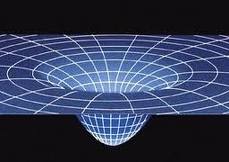
Einstein decreed: Matter and energy tell space (and space-time) how to curve.
And since matter is nothing but condensed ether we can discern a link between Einstein's train of thought and the standard teaching of the Catholic Church as evidenced by the cooperation between Einstein and Father Lemaitre, the originator of the Big Bang theory. In the teaching of the Church the ASTRAL LIGHT or lower Ether is full of conscious and semi-conscious and unconscious entities.
The whole hierarchy of the "Fallen" angels is there; the Cosmocratores - or the "world bearers," (according to Bossuet); Mundi Tenentes -- the "world holders," as Tertullian calls them; and Mundi Domini "world dominations," or rather dominators, the Curbati, or "Curved," etc., who thus make of the stars and celestial orbs in their course -- Devils! Gnosticism holds that the world is controlled by evil archons, one of whom is the demiurge, the deity of the Old Testament who holds the human spirit captive.
For it is thus that the Church has interpreted verse 12 in the VI. Chapter to the Ephesians. "For we wrestle not against flesh and blood, but against principalities, against powers, against the rulers of the darkness of this world." Further on St. Paul mentions the spiritual malices ("wickedness" in English texts) SPREAD IN THE AIR - "Spiritualia nequitiae coelestibus," the Latin texts giving various names to these "malices," the innocent "Elementals."
Einstein superimposed the Gnostic horror of matter on Descartes's space identified with matter (res extensa). Gravity identified by Newton with spiritual body of Jesus Christ contradicts the bodily resurrection of Jesus which means that Newton, like Marcion, rejected any idea of bodily resurrection. The idea of purgatory rooted in Virgil's Aeneid points in the same direction. Here are the relevant lines:
In the dark dungeon of the limbs confin'd,
Assert the native skies, or own its heav'nly kind:
Nor death itself can wholly wash their stains;
But long-contracted filth ev'n in the soul remains.
For this are various penances enjoin'd;
And some are hung to bleach upon the wind,
Some plung'd in waters, others purg'd in fires,
Till all the dregs are drain'd, and all the rust expires.
All have their manes, and those manes bear:
The few, so cleans'd, to these abodes repair,
And breathe, in ample fields, the soft Elysian air.
Then are they happy, when by length of time
The scurf is worn away of each committed crime;
No speck is left of their habitual stains,
But the pure ether of the soul remains.
It was in 1963 when the Twisted Cross Crucifix was first presented to the Catholic public by Giovanni Battista Montini as Pope Paul VI. Instead of the traditional Christian cross of Jesus. The meaning of this act was loud and clear: the Jesuits (who educated Einstein in Italy) had taken over the Vatican. The favorite emblem of John Paul II in his innumerable pilgrimages was the Curved Crucifix which stood for the curved space-time-matter of Einstein.. Piers Compton in his book, The broken Cross: Hidden Hand of the Vatican stated that the bent Crucifix is: “a sinister symbol, used by Satanists in the 6th century, that had been revived at the time of Vatican II. This was a bent or broken cross, on which they displayed a repulsive and distorted figure of Christ, which the black magicians and sorcerers of the Middle Ages had made use of to represent the Biblical term 'Nark of the beast'...
Well, the last biography of Isaac Newton written by Michael White and published by Helix Books in 1998 was titled: Isaac Newton. The Last Sorcerer.
The emaciated, or should I say, the spiritual body of Jesus Christ hanging on the two bent, crossed beams of this crucifix is strongly reminiscent of the body of the Fasting Buddha which became the inspiration of all gnostically-minded Christians who inspired by Virgil's horror of the body wanted to get rid of as much flesh as they could to transform their souls into pure ether. John Paul II made his point when he placed a statue of the Buddha, the greatest atheist of all times, on the ecumenical altar in Assisi, where he used to meet Dalai Lama, Islamic imams and other crypto-atheists. The promotion of the Einstein science by John Paul II served the purpose of his radical pro-Palestinian policy demonstrated by his numerous audiences for Y. Arafat. Let me remind here a juicy fact from A. Einstein's biography which betrays adequately his Jesuit upbringing:
By December 1948, a distinguished contingent of Jewish scientists and intellectuals warned in The New York Times that those leading the effort to establish a Jewish state bear "the unmistakable stamp of a Fascist party". Albert Einstein joined concerned Jews who cautioned Americans "not to support this latest manifestation of fascism. "The undersigned therefore take this means of publicly presenting a few salient facts concerning Begin and his party, and of urging all concerned not to support this latest manifestation of fascism." Albert Einstein, The New York Times, 4 December 1948
Can you imagine a dial of a Einstein watch or somebody saying I will call you in 1.08×10¹⁴ centimetres” instead of “in one hour”?
Ellery Schempp in an On-Line article Warning: Gravity is “only a theory” wrote:
“Even Isaac Newton, said to be the discoverer of gravity, knew there were problems with the theory. He claims to have invented the idea early in his life, but he knew that no mathematician of his day would approve his theory, so he invented a whole new branch of mathematics, called fluxions, just to “prove” his theory. This became calculus, a deeply flawed branch having to do with so-called “infinitesimals” which have never been observed. Then when Einstein invented a new theory of gravity, he, too, used an obscure bit of mathematics called tensors. It seems that every time there is a theory of gravity, it is mixed up with “fringe” mathematics. Newton, by the way, was far from a secular scientist, and the bulk of his writings is actually on theology and Christianity. His dabbling in gravity, alchemy, and calculus was a mere sideline, perhaps an aberration best left forgotten in describing his career and faith in a Creator.”
Monday, August 2, 2010

Saturday, July 31, 2010
Isaac Newton's Ethereal God
Latium Latinus (the Roman form of the Greek Lateinos), and Lateo, “to lie hid,” all alike come from the Chaldee “Lat,” which has the same meaning. This is evident from the name of the fish Latus, which was worshipped along with the Egyptian Minerva, in the city of Latopolis in Egypt, now Esneh, that fish Latus evidently just being another name for the fish-god Dagon. We have seen that Ichthys, or the Fish, was one of the names of Bacchus; and the Assyrian goddess Atergatis, with her son Ichthys is said to have been cast into the lake of Ascalon. That the sun-god Apollo had been known under the name of Lat, may be inferred from the Greek name of his mother-wife Leto, or in Doric, Lato, which is just the feminine of Lat. Dagon was venerated by the Philistines whom the KJV turned into Palestinians. By order of emperor Hadrian the Holy Land was renamed Palestine.
The ancient name of Rome was Saturnia, the city of Saturn. Saturn was the “father of gods”, also called the Father of Zeus (Jupiter) Saturn was also known as Kronos and he was known as the first King of Babylon. Hislop in his The Two Babylons quotes Eusebius who stated that “Saturn or Belus was the first king of Baylon.” Belus, of course is the Greek word for Baal, as is generally known. “It was an essential principle of the Babylonian system that the Sun was or Baal was the only god. - wrote Hislop. Saturn was also known as Lateinos and Lateinos was identified by Virgil as the “child of the Sun”.
It should be reminded here that the Etruscans, called themselves Rasena; and the descendants of the most ancient families always believed that the Rasena had come from the great and ancient city of Resen or RSN, the capital of Aturia in the land of Assyria situated on the great river Tigris. In the country of Ethiopia, where the Pharaohs had granted lands to a group of no less than 240,000 Rasenas, they built the town of Esar – that was the Etruscan word for demigod. From Egypt they had brought many of their sacred rites; for many centuries they used to place Egyptian things and implement in their tombs.
Franz Cumont in his Astrology and Religion Among the Greeks and Romans wrote: “From astronomical speculations the Chaldeans had deduced a whole system of religious dogmas. The sun, set in the midst of the superimposed planets, regulates their harmonious movements. As its heat impels them forward, then draws them back, it is constantly influencing, according to its various aspects, the direction of their course and their action upon the earth...The Babylonian rules wore solar crosses on their chests, exactly, like the Catholic Bishops do.
2 Ki 23:11 And he took away the horses that the King of Judah had given to the sun, at the entering in of the house of the Lord, by the chamber of Nathanmelech the chamberlain, which was in the suburbs, and burned the chariots of the sun with fire. The Catholic translations of Is 27:9 (So that the Asherim and the sun images shall rise no more) avoid the term ‘sun-images’ replacing it by ‘objects of cult’.
At Deuteronomy 17:2-3, we read further about Israelites "whoring after" sun worship and astrotheology: "If there is found among you, within any of your towns which the LORD your God gives you, a man or woman who does what is evil in the sight of the LORD your God, in transgressing his covenant, and has gone and served other gods and worshiped them, or the sun or the moon or any of the host of heaven, which I have forbidden..."
Invicta Roma was the Empire of Sol Invictus or Kosmokrator (Ruler of the Cosmos) and as such was “destined to rule the whole world” (Virgil). When Rome succumbed to Jesus it did not embrace him as a Jewish teacher but as the sun god Helios (Apollo) whose halo used to symbolize divine rank of Roman emperors. For centuries, the Roman propaganda, especially Cicero’s, proclaimed that the Jews were “a nation born to servitude,” like all other conquered “barbarians”. The same author, while popularizing the Pythagorean heliocentrism in his Dream of Scipio speaks of the sun as “the Lord, chief and ruler of the other lights, the Mind and guiding principle of the universe.”
Virgil's Heliocentrism
The Sibylline books have been the source of the inspiration of Virgil; Apollo was believed to have revealed the Sibylline Books which, according to tradition emanated from a Sibyl or trance-medium at Cumae, near Naples (Cp. “they were all filled with the Holy Spirit in the shape of tongues of fire).
Quid faciat laetas segetes, quo sidere terram vertere-
Maecenas, ulmisque vitis conveniat
(Virgil Georgica, 1-2;1-4)
Virgil is saying that the earth is in fact spinning! Virgil identifies the sun as a star amongst many others. How could Virgil be talking about the sun as a star (which is exactly what modern science teaches us).
The works of Classical authors of ancient Greece or Rome were transcribed throughout the middle ages. These copies were made in monasteries, often many hundreds of miles apart from one another, throughout Europe. Yet despite the distances involved and the lack of communication between these diverse centers of culture and learning, no discrepancy has ever been detected between the manuscript copies of Virgil’s works, thereby attesting to their perfect, preservation.
It should also not be forgotten that Virgil’s influence has never waned in Western culture - even among Christians. Indeed, Virgil acted as mentor and guide for the Florentine poet Dante Alighieri (1265-1321 CE) in his The Divine Comedy. Virgil accompanies Dante into the circles of an imagined Hell where, among the schismatics, deceivers and scandalmongers, they see the writhing body of one of the condemned, a certain Mahomet. Inspired by Virgil, Dante gives a vivid and ominous description of this inmate of the Inferno:
“See Mahomet, how he is mutilated. Between his legs all of his red guts hung with the heart, the lungs, the liver, the gall bladder, and the shrivelled sac that asses faeces to the bung.” (Canto XXVIII). Interestingly, Dante's “Jove for mankind crucified” was Vigil's God of his heliocentrism:
Tum pater omnipotens fecundis imbribus Aether
coniugis in gremium laetae descendit, – (Virgil, Georgics II)
Then Aether, sire omnipotent, leaps down
With quickening showers to his glad wife's embrace,
All the ancient nations deified AEther in its imponderable aspect and potency. Virgil calls Jupiter, Pater omnipotens AEther, "the great AEther."The Hindus have also placed it among their deities; under the name of Akasa (the synthesis of AEther). And the author of the Homoiomerian System of philosophy, Anaxagoras of Clazomenae, firmly believed that the spiritual prototypes of all things, as well as their elements, were to be found in the boundless Ether where they were generated, whence they evolved, and whither they returned. Virgil in his Aeneid writes about the pure ether of the soul.
Raining of Light from Heaven
In all rationalistic and materialistic philosophies Heaven becomes impersonal (like impersonal Brahma which became Aristotle's energeia, the substance of God, which inspired the substance of the Nicene Creed) – it is nature and natural process and accordingly the heliocentrism replaces creation with emanation; light as the emanation from the sun becomes the primary form of corporeal matter, which by multiplying itself outward from the center of radiation produces the physical world. In this sense Heraclitus spoke of “all things as an exchange for fire and fire for all things” Similarly Galileo regarded wine as mixture of light and moisture, and the Sages of the Lagado Academy in Guliver's Travels tried to extract light from cucumbers. In one of the early Greek hymns the sun “transforms water into human beings” and only against this philosophical background one could properly understand the “Children of Light” in the Gospel of John “as children born not of natural descent, nor of human decision or a husband's will, but born of sun God” (1:18; see below about Katie King). In the Russian prose epic 'Slovo o pulku Igoreve” of the 12th century, Vladimir and the Russians called themselves the grandchildren of Dazhbog, the god of sun and fire” Dazhbog played a significant part till long after Christianization because of his connection with the fire and the Slavs' worship of the hearth as a sacred place in the house. The Polish name Kupala (a phallic deity) later used in folk ritual in connection with the fire worship, stands for the same idea.
At the heart of both of these understandings of the Descent of the Soul is the Emanation of living streams of "being" and "intelligence" from the first fount of all things; the "First Cause" of all. For simplicity sake let us call this "First Cause" the "Absolute", "The One", or "Ain Soph" by the familiar term "God".In the Egyptian Religion this condition of "non-being" was termed "Nun", and translates as "the deep".
"Water ascends toward the sky in vapors; from the sun it descends in rain, from the rain are born the plants, and from the plants, animals" (Manu, book iii., sloka 76).
One of the earliest forms of Emanation described is expressed in the Great Ennead of Heliopolis in ancient Egypt. This is a hierarch of Divine "god-goddess pairs" which are Emanated from a single source of Being (Nun). It was Plato that introduced this same idea of Emanation to the Greek-speaking world, and his ideas were developed continuously over the 1000 year duration of the Platonic Academy in Athens.
From this One through a process of Emanation from "The One" life pours forth its power and essence in streams, called "rivers of vivification" like the Ganga river in the Hindu Myth, "from on high as far as to the last of things," bringing all forms of life into existence and enouling all forms with more or less of its own mighty being.
The central Sun of the Babylonian myth is a fountain of 'living waters,' healing 'waters' or of healing energy (the Aryan term Brahmah means 'energy'). Ancient wisdom traditions maintain humans, and all other beings in our galaxy, emanate from and share a common home: the Central Sun at the core of our Milky Way galaxy.
The pagan religious traditions of Arabia show great diversity. The Southern Arabia had ‘Athar, the god of thunderstorms and rain. "Two others, the Rig and Athar teach us fraternity, Sheltering under their lustre dispels darkness till eternity" (This poem was written by Labi-Bin-E- Akhtab-Bin-E-Turfa who lived in Arabia around 1850 B.C.)
The god Athar (Ether) inspired the following verse in the Qur'an, which is friendly toward Rome.
"It is He who created the night and the day, and the sun and the moon, all (the celestial bodies) swim along, each in its orbit with its own motion. (21:33)"
Abdullah Yusuf Ali commented on this verse: “...the metaphor of swimming implied in the original words how beautiful is to contemplate the heavenly bodies swimming through space (or ether) in their rounded courses before our gaze.
This global solar religion of Nature is reflected in various languages. Salverte in his Des Sciences Occultes, observed: "Almost all the Tartar princes, trace their genealogy to a celestial virgin, impregnated by a sun-beam, or some equally miraculous means." In India, the mother of Surya, the sun-god, who was born to destroy the enemies of the gods, is said to have become pregnant in this way, a beam of the sun having entered her womb, in consequence of which she brought forth the sun-god.”
The name of Persian sun god Sure is cognate with Chaldean zuhr (“to shine”), zuhro (“the Shiner” cp. Zorro) and, of course zuro (“the seed”) because a beam of light was also an impregnating seed (Cp. Justin Martyr's Logos S[permatikos). The name Pyrisoporus, as aplied to Bacchus, means Ignigena, or the “Seed of Fire”, and Ala-sporos, the “Seed of God”, is just a similar expression formed in the same way.
The Poimandres writer fell into a deep and heavy trance, in which there appeared to him a being who introduced himself as Poimandres (Shepherd of Men), “the Mind of Authority.” Poimandres then shows the mystic a vision, in which he sees a great light and great darkness, respectively reality and matter. From the light comes “a Holy Logos,” ... the “shining Song of God,”: who proceeds from Mind itself...
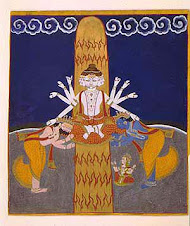
The name Lingam appears as a name of Shiva in the Shiva Sahasranama where it is translated by Ram Karan Sharma as "(Identifiable as) a symbol of the origin of the Universe. Copernicus's expression “family of stars” belongs to the teachings of the Aryan cosmogony. A few years ago, Father George Coyne, head of the Vatican Observatory Research Group suggested that we might view stars as God's sperm, which is the basic teaching of the Aryan cosmogony. Philo called the thoughts of the Logos logoi spermatikoi and described them as having a role in the production of the cosmos which, he insisted, was brought into being out of non-being by the agency of God. In the Hindu Myth when the desire arose in it (i.e. in the sun god in the shape of linga (phallus) “the creation” or rather emanation or emission (ejaculation) of semen followed. The Christian heretic Justin who envisaged Jesus as ever-existent “seed-sowing Reason” believed that the good God was an erect phallus, like Shiva (Hippolytus, Refutation 5.7.21-22).In the beginning there was sexual desire. John Paul II's Theology of the Body was inspired by this teaching. Like Copernicus, also Kepler believed that the stars were born of the semen of the sun god (disseminated is derived from Latin semen, seed).
Virgil's “quickening showers” became Newton's “precipitations”
Since time immemorial astrology went hand in hand with the theory of emanationism, philosophical and theological theory that saw all of creation as an unwilled, necessary and spontaneous outflow of contingent beings of descending perfection, from an infinite, unchanged primary substance. In conformity with this theory Kepler wrote about “species immateriata” which flows out of the sun, inundates all the planets, including the earth, and sets them in whirling motion. Newton, like Kepler, was influenced by the same Hermetic tradition. He felt that the apparent attraction of tiny bits of paper to a piece of glass that has been rubbed with cloth results from an ethereal effluvium that streams out of the glass and carries the bits of paper back with it. This mechanical philosophy explained apparent attractions away by means of invisible ethereal mechanisms. The ancient heliocentrist, Egyptian pharaoh Akhenaten had himself portrayed sitting in the sun’s rays ending in hands. For him these rays ending in hands had the same meaning as ethereal effluvium had for Newton.
Some of Newton's early ideas derive the aether from the principles of continuity and mixture in a picture surprisingly close to the basic Stoic assumptions:“Perhaps the whole frame of nature may be nothing but various contextures of some certain aetherial spirits and vapours, condensed as it were by precipitation...and after condensation wrought into various forms...Thus perhaps may all things be originated from aether.” In 1887 Albert a. Michelson and Edward W. Morley, conducted an experiment that put an end to the ether concept.
In the Stoic doctrine, which is solar mythology dressed up as philosophy, bodies are made up of two principles, a passive, matter, and an active principle, form; but form itself is corporeal. It is warm vapour (pneuma), or fire, yet fire distinct from the element of this name; it is primitive fashioning fire (pyr technikon), sungod. The often-quoted Stoic sentence, “Nature is an artistically working fire, going on its way to create,” should be reminded in this context. The Vedic god Syria was a solar bull. According to the Assyrians, the bull was born of the sun. There is a long history behind John Bull, the symbol of the Britons.
The following passage presents Pliny's very Copernican heliocentrism:“Upheld by the same vapour between earth and heaven, at definite spaces apart, hang the seven stars which owing to their motion we call 'planets...' And the houris are various contextures of the same aetherial spirits and vapours... The Apollo astronaut Russel Schweikart, a New Ager, of course, (See, Gaia, Evolution and the Significance of Space Exploration, JS Journal, published by International Synergy (December 1987; 2:2, p. 29) “was the first person to walk in space without an umbilical cord to the craft, swept along by the magical, invisible connection of shared momentum,” believes that Gaia may be nearing some sort of threshold analogous to giving birth.
Carl Sagan, a New Ager, a lunatic chasing Kepler’s Lunarians and one of the High Priests of the scientific establishment, expressed the gist of Copernicus’s belief in “family of stars” as follows: “Our ancestors worshiped the sun, and they were far from foolish. It makes good sense to revere the sun and the stars, because we are their children.”
Newton's idea was to explain the force of gravity by the gradually varying degrees of density of the ethereal medium In his letter to Oldenburg before, he says: “But it is not to be supposed that this medium is one uniform matter, but composed partly of the main phlegmatic body of aether, partly of other various aethereal spirits, much after the manner that air is composed of the phlegmatic body of air intermixed with various vapours and exhalations. For the electric and magnetic effluvia, and the gravitating principle seem to argue such variety. The principle of differentiation by mixture propounded here is very similar to that of the Stoics which we would trace back to that of Diogenes of Apollonia. Pneuma, it is true, had gradually become the “fifth element”, identified with aether, and was probably in the course of time detached from its origins and regarded as a simple substance. The Aryan idea of castes (i.e. Darwin's “favoured races”) and Stalin's idea of purges are rooted in such a teaching. But the pure ether of the soul remains (Virgil)
Science/Mysteries.uk: Darwinian Creation by Precipitation
Sextus Empiricus, gives us the reason on which the Pythagoreans and Empedocles based their belief that the fellowship of men is not only with one another and with their gods, but also with animals: for there is one spirit (pneuma) which pervades, like a soul, the whole universe, and which also makes us one with them.” This link between gods, men and animals was observed in the Egyptian Theozoology. Theosophy is a follow up of this Egyptian Theozoology.
The Stoics regarded the pneuma as the generator of physical qualities. Chrysippos in his On Physical State wrote: The physical states are nothing else but spirits, because the bodies are made cohesive by them. And the binding air is the cause for those bound into such a state being imbued with a certain property which is called hardness in iron, solidity in stone, brightness in silver.” (...) Matter, being inert by itself and sluggish, is the substratum of the properties, which are pneumata and air-like tensions giving definite form to those parts of matter in which they reside.” Physis expresses organic structure and psyche the structure of the living being.
Jupiter, the omnipotent Ether of Virgil was the Roman counterpart of Zeus. Cleanthes, Zeno’s successor as head of the Stoic School, emphasizes the religious side of the Stoic doctrine in his HYMN TO ZEUS: “Most glorious and omnipotent Zeus, ruler of Nature, worshiped under many names, by whom all things are governed in accordance with Law, hail to thee! From thee we are born...” Cp. Virgil’s Magnus ab integro saeculorum nascitur ordo; In the Latin tradition the words ‘God’ and ‘Nature’ are interchangeable.
Well, Sir William Crookes, Physicist, chemist and a President of Royal Society, claimed to have seen materialized, by scientific precipitation spirit forms, or spiritual bodies walking and talking during séances He invited the two secretaries of the Royal Society, Professor Stokes and Sharpey, to visit his home to witness the phenomena for themselves – an invitation which neither of them accepted. Sir Crookes himself materialized a spirit whom he named Katie King and described her in such words:
"Round her she made an atmosphere of life;
The very air seemed lighter from her eyes;
They were so soft and beautiful and rife
With all we can imagine of the skies;
Her overpowering presence makes you feel
It would not be idolatry to kneel!"
(See his pamphlet The Last of Katie King, p. 112)
Katie King was the first houri materialized by scientific precipitation on earth!
Darwin, writing to Sir Francis Galton on 23 Jan. 1872, said: “Have you seen Mr. Crookes? I hope to heaven you have, as I for one should feel entire confidence in your conclusion!” In 1874 after reading Crookes’s Notes of an Enquiry into the Phenomena Called Spiritual, Darwin remarked in a letter to Lady Derby, “If you had called here after I had read the article you would have found me a much perplexed man. Cannot disbelieve Mr.Crookes’s statements, nor can believe his results!” Galton did indeed call in Crookes, and he was soon able to report to Darwin, in a letter dated March 28, 1872: “Crookes is working deliberately and well.” Three weeks later Galton wrote: “Crookes, I am sure so far as it is just for me to give an opinion, is thoroughly scientific in his procedure. I am convinced; the affair is no matter of vulgar legerdemain.”
One of the early pioneers of Spiritualist inquiry was the Ghost Society at the University of Cambridge, England. The Founders of Psychical Research records the stated objective of the Cambridge Ghost Society: "In 1851, was founded at Cambridge a Society to 'conduct a serious and earnest inquiry into the nature of the phenomena vaguely called supernatural,' and a number of distinguished persons became members."
Col. Henry S. Olcott, one of the founders of Theosophical Society together with his Russian-born wife Helena Blavatsky who actively pursued the “whoredom of spiritualism” first came on the public horizon in 1874 as a journalist sent by the New York Graphic to investigate and write up alleged spiritualistic phenomena occurring in the Eddy family in Chittenden, Vt. He was there from August to December 1874, wrote his letters to his paper, and afterward (early in 1875) published his book called People from the Other World. (Now they turned into aliens).This included besides the Eddy affair, the Katie King business of 1874-5 which deceived Ch. Darwin so sadly. It is one of the best ghost books extant, full of spectral pictures (there was a ghostly fiction named John King, at full length floating in space, holding up a peculiar globe of light shaped like a glass decanter. This picture was taken in Europe and in Russia), not a word of truth in the text and redolent with the flavor of gullibility. Olcott knew that every phenomenon he described was fraudulent, and when somebody proposed to show up the Eddy tricks in their true light, Olcott begged for God's (sic!) sake not to have it done because 'it would injure the sale of his book.'
In 1874, Walt Whitman was invited to write a poem about the Spiritualism movement, to which he responded, "It seems to me nearly altogether a poor, cheap, crude humbug." W. Whitman believed in Biblical geocentrism.
The Richard Dawkins Delusion
THE SCIENTIFIC PROOF OF SURVIVAL AFTER DEATH --We have had the experimental proof of survival after death ever since Sir William Crookes published the results of his experiments in the leading scientific journal of his day - The Quarterly Journal of Science - in 1874. These were repeatable experiments under laboratory conditions. International teams of scientists then repeated the experiments and obtained the same results. People who had once lived on earth came back and proved to these scientific teams that they had conquered death and were still very much alive. This is what Professor Charles Richet, the French Nobel Laureate for medical science, said about the experiments: "There is ample proof that experimental materialisations should take definite rank as a scientific fact." (Michael Roll, The Scientific Proof of Survival after Death) Somebody, would materialize Jesus Christ, please.
The ancient name of Rome was Saturnia, the city of Saturn. Saturn was the “father of gods”, also called the Father of Zeus (Jupiter) Saturn was also known as Kronos and he was known as the first King of Babylon. Hislop in his The Two Babylons quotes Eusebius who stated that “Saturn or Belus was the first king of Baylon.” Belus, of course is the Greek word for Baal, as is generally known. “It was an essential principle of the Babylonian system that the Sun was or Baal was the only god. - wrote Hislop. Saturn was also known as Lateinos and Lateinos was identified by Virgil as the “child of the Sun”.
It should be reminded here that the Etruscans, called themselves Rasena; and the descendants of the most ancient families always believed that the Rasena had come from the great and ancient city of Resen or RSN, the capital of Aturia in the land of Assyria situated on the great river Tigris. In the country of Ethiopia, where the Pharaohs had granted lands to a group of no less than 240,000 Rasenas, they built the town of Esar – that was the Etruscan word for demigod. From Egypt they had brought many of their sacred rites; for many centuries they used to place Egyptian things and implement in their tombs.
Franz Cumont in his Astrology and Religion Among the Greeks and Romans wrote: “From astronomical speculations the Chaldeans had deduced a whole system of religious dogmas. The sun, set in the midst of the superimposed planets, regulates their harmonious movements. As its heat impels them forward, then draws them back, it is constantly influencing, according to its various aspects, the direction of their course and their action upon the earth...The Babylonian rules wore solar crosses on their chests, exactly, like the Catholic Bishops do.
2 Ki 23:11 And he took away the horses that the King of Judah had given to the sun, at the entering in of the house of the Lord, by the chamber of Nathanmelech the chamberlain, which was in the suburbs, and burned the chariots of the sun with fire. The Catholic translations of Is 27:9 (So that the Asherim and the sun images shall rise no more) avoid the term ‘sun-images’ replacing it by ‘objects of cult’.
At Deuteronomy 17:2-3, we read further about Israelites "whoring after" sun worship and astrotheology: "If there is found among you, within any of your towns which the LORD your God gives you, a man or woman who does what is evil in the sight of the LORD your God, in transgressing his covenant, and has gone and served other gods and worshiped them, or the sun or the moon or any of the host of heaven, which I have forbidden..."
Invicta Roma was the Empire of Sol Invictus or Kosmokrator (Ruler of the Cosmos) and as such was “destined to rule the whole world” (Virgil). When Rome succumbed to Jesus it did not embrace him as a Jewish teacher but as the sun god Helios (Apollo) whose halo used to symbolize divine rank of Roman emperors. For centuries, the Roman propaganda, especially Cicero’s, proclaimed that the Jews were “a nation born to servitude,” like all other conquered “barbarians”. The same author, while popularizing the Pythagorean heliocentrism in his Dream of Scipio speaks of the sun as “the Lord, chief and ruler of the other lights, the Mind and guiding principle of the universe.”
Virgil's Heliocentrism
The Sibylline books have been the source of the inspiration of Virgil; Apollo was believed to have revealed the Sibylline Books which, according to tradition emanated from a Sibyl or trance-medium at Cumae, near Naples (Cp. “they were all filled with the Holy Spirit in the shape of tongues of fire).
Quid faciat laetas segetes, quo sidere terram vertere-
Maecenas, ulmisque vitis conveniat
(Virgil Georgica, 1-2;1-4)
Virgil is saying that the earth is in fact spinning! Virgil identifies the sun as a star amongst many others. How could Virgil be talking about the sun as a star (which is exactly what modern science teaches us).
The works of Classical authors of ancient Greece or Rome were transcribed throughout the middle ages. These copies were made in monasteries, often many hundreds of miles apart from one another, throughout Europe. Yet despite the distances involved and the lack of communication between these diverse centers of culture and learning, no discrepancy has ever been detected between the manuscript copies of Virgil’s works, thereby attesting to their perfect, preservation.
It should also not be forgotten that Virgil’s influence has never waned in Western culture - even among Christians. Indeed, Virgil acted as mentor and guide for the Florentine poet Dante Alighieri (1265-1321 CE) in his The Divine Comedy. Virgil accompanies Dante into the circles of an imagined Hell where, among the schismatics, deceivers and scandalmongers, they see the writhing body of one of the condemned, a certain Mahomet. Inspired by Virgil, Dante gives a vivid and ominous description of this inmate of the Inferno:
“See Mahomet, how he is mutilated. Between his legs all of his red guts hung with the heart, the lungs, the liver, the gall bladder, and the shrivelled sac that asses faeces to the bung.” (Canto XXVIII). Interestingly, Dante's “Jove for mankind crucified” was Vigil's God of his heliocentrism:
Tum pater omnipotens fecundis imbribus Aether
coniugis in gremium laetae descendit, – (Virgil, Georgics II)
Then Aether, sire omnipotent, leaps down
With quickening showers to his glad wife's embrace,
All the ancient nations deified AEther in its imponderable aspect and potency. Virgil calls Jupiter, Pater omnipotens AEther, "the great AEther."The Hindus have also placed it among their deities; under the name of Akasa (the synthesis of AEther). And the author of the Homoiomerian System of philosophy, Anaxagoras of Clazomenae, firmly believed that the spiritual prototypes of all things, as well as their elements, were to be found in the boundless Ether where they were generated, whence they evolved, and whither they returned. Virgil in his Aeneid writes about the pure ether of the soul.
Raining of Light from Heaven
In all rationalistic and materialistic philosophies Heaven becomes impersonal (like impersonal Brahma which became Aristotle's energeia, the substance of God, which inspired the substance of the Nicene Creed) – it is nature and natural process and accordingly the heliocentrism replaces creation with emanation; light as the emanation from the sun becomes the primary form of corporeal matter, which by multiplying itself outward from the center of radiation produces the physical world. In this sense Heraclitus spoke of “all things as an exchange for fire and fire for all things” Similarly Galileo regarded wine as mixture of light and moisture, and the Sages of the Lagado Academy in Guliver's Travels tried to extract light from cucumbers. In one of the early Greek hymns the sun “transforms water into human beings” and only against this philosophical background one could properly understand the “Children of Light” in the Gospel of John “as children born not of natural descent, nor of human decision or a husband's will, but born of sun God” (1:18; see below about Katie King). In the Russian prose epic 'Slovo o pulku Igoreve” of the 12th century, Vladimir and the Russians called themselves the grandchildren of Dazhbog, the god of sun and fire” Dazhbog played a significant part till long after Christianization because of his connection with the fire and the Slavs' worship of the hearth as a sacred place in the house. The Polish name Kupala (a phallic deity) later used in folk ritual in connection with the fire worship, stands for the same idea.
At the heart of both of these understandings of the Descent of the Soul is the Emanation of living streams of "being" and "intelligence" from the first fount of all things; the "First Cause" of all. For simplicity sake let us call this "First Cause" the "Absolute", "The One", or "Ain Soph" by the familiar term "God".In the Egyptian Religion this condition of "non-being" was termed "Nun", and translates as "the deep".
"Water ascends toward the sky in vapors; from the sun it descends in rain, from the rain are born the plants, and from the plants, animals" (Manu, book iii., sloka 76).
One of the earliest forms of Emanation described is expressed in the Great Ennead of Heliopolis in ancient Egypt. This is a hierarch of Divine "god-goddess pairs" which are Emanated from a single source of Being (Nun). It was Plato that introduced this same idea of Emanation to the Greek-speaking world, and his ideas were developed continuously over the 1000 year duration of the Platonic Academy in Athens.
From this One through a process of Emanation from "The One" life pours forth its power and essence in streams, called "rivers of vivification" like the Ganga river in the Hindu Myth, "from on high as far as to the last of things," bringing all forms of life into existence and enouling all forms with more or less of its own mighty being.
The central Sun of the Babylonian myth is a fountain of 'living waters,' healing 'waters' or of healing energy (the Aryan term Brahmah means 'energy'). Ancient wisdom traditions maintain humans, and all other beings in our galaxy, emanate from and share a common home: the Central Sun at the core of our Milky Way galaxy.
The pagan religious traditions of Arabia show great diversity. The Southern Arabia had ‘Athar, the god of thunderstorms and rain. "Two others, the Rig and Athar teach us fraternity, Sheltering under their lustre dispels darkness till eternity" (This poem was written by Labi-Bin-E- Akhtab-Bin-E-Turfa who lived in Arabia around 1850 B.C.)
The god Athar (Ether) inspired the following verse in the Qur'an, which is friendly toward Rome.
"It is He who created the night and the day, and the sun and the moon, all (the celestial bodies) swim along, each in its orbit with its own motion. (21:33)"
Abdullah Yusuf Ali commented on this verse: “...the metaphor of swimming implied in the original words how beautiful is to contemplate the heavenly bodies swimming through space (or ether) in their rounded courses before our gaze.
This global solar religion of Nature is reflected in various languages. Salverte in his Des Sciences Occultes, observed: "Almost all the Tartar princes, trace their genealogy to a celestial virgin, impregnated by a sun-beam, or some equally miraculous means." In India, the mother of Surya, the sun-god, who was born to destroy the enemies of the gods, is said to have become pregnant in this way, a beam of the sun having entered her womb, in consequence of which she brought forth the sun-god.”
The name of Persian sun god Sure is cognate with Chaldean zuhr (“to shine”), zuhro (“the Shiner” cp. Zorro) and, of course zuro (“the seed”) because a beam of light was also an impregnating seed (Cp. Justin Martyr's Logos S[permatikos). The name Pyrisoporus, as aplied to Bacchus, means Ignigena, or the “Seed of Fire”, and Ala-sporos, the “Seed of God”, is just a similar expression formed in the same way.
The Poimandres writer fell into a deep and heavy trance, in which there appeared to him a being who introduced himself as Poimandres (Shepherd of Men), “the Mind of Authority.” Poimandres then shows the mystic a vision, in which he sees a great light and great darkness, respectively reality and matter. From the light comes “a Holy Logos,” ... the “shining Song of God,”: who proceeds from Mind itself...
The name Lingam appears as a name of Shiva in the Shiva Sahasranama where it is translated by Ram Karan Sharma as "(Identifiable as) a symbol of the origin of the Universe. Copernicus's expression “family of stars” belongs to the teachings of the Aryan cosmogony. A few years ago, Father George Coyne, head of the Vatican Observatory Research Group suggested that we might view stars as God's sperm, which is the basic teaching of the Aryan cosmogony. Philo called the thoughts of the Logos logoi spermatikoi and described them as having a role in the production of the cosmos which, he insisted, was brought into being out of non-being by the agency of God. In the Hindu Myth when the desire arose in it (i.e. in the sun god in the shape of linga (phallus) “the creation” or rather emanation or emission (ejaculation) of semen followed. The Christian heretic Justin who envisaged Jesus as ever-existent “seed-sowing Reason” believed that the good God was an erect phallus, like Shiva (Hippolytus, Refutation 5.7.21-22).In the beginning there was sexual desire. John Paul II's Theology of the Body was inspired by this teaching. Like Copernicus, also Kepler believed that the stars were born of the semen of the sun god (disseminated is derived from Latin semen, seed).
Virgil's “quickening showers” became Newton's “precipitations”
Since time immemorial astrology went hand in hand with the theory of emanationism, philosophical and theological theory that saw all of creation as an unwilled, necessary and spontaneous outflow of contingent beings of descending perfection, from an infinite, unchanged primary substance. In conformity with this theory Kepler wrote about “species immateriata” which flows out of the sun, inundates all the planets, including the earth, and sets them in whirling motion. Newton, like Kepler, was influenced by the same Hermetic tradition. He felt that the apparent attraction of tiny bits of paper to a piece of glass that has been rubbed with cloth results from an ethereal effluvium that streams out of the glass and carries the bits of paper back with it. This mechanical philosophy explained apparent attractions away by means of invisible ethereal mechanisms. The ancient heliocentrist, Egyptian pharaoh Akhenaten had himself portrayed sitting in the sun’s rays ending in hands. For him these rays ending in hands had the same meaning as ethereal effluvium had for Newton.
Some of Newton's early ideas derive the aether from the principles of continuity and mixture in a picture surprisingly close to the basic Stoic assumptions:“Perhaps the whole frame of nature may be nothing but various contextures of some certain aetherial spirits and vapours, condensed as it were by precipitation...and after condensation wrought into various forms...Thus perhaps may all things be originated from aether.” In 1887 Albert a. Michelson and Edward W. Morley, conducted an experiment that put an end to the ether concept.
In the Stoic doctrine, which is solar mythology dressed up as philosophy, bodies are made up of two principles, a passive, matter, and an active principle, form; but form itself is corporeal. It is warm vapour (pneuma), or fire, yet fire distinct from the element of this name; it is primitive fashioning fire (pyr technikon), sungod. The often-quoted Stoic sentence, “Nature is an artistically working fire, going on its way to create,” should be reminded in this context. The Vedic god Syria was a solar bull. According to the Assyrians, the bull was born of the sun. There is a long history behind John Bull, the symbol of the Britons.
The following passage presents Pliny's very Copernican heliocentrism:“Upheld by the same vapour between earth and heaven, at definite spaces apart, hang the seven stars which owing to their motion we call 'planets...' And the houris are various contextures of the same aetherial spirits and vapours... The Apollo astronaut Russel Schweikart, a New Ager, of course, (See, Gaia, Evolution and the Significance of Space Exploration, JS Journal, published by International Synergy (December 1987; 2:2, p. 29) “was the first person to walk in space without an umbilical cord to the craft, swept along by the magical, invisible connection of shared momentum,” believes that Gaia may be nearing some sort of threshold analogous to giving birth.
Carl Sagan, a New Ager, a lunatic chasing Kepler’s Lunarians and one of the High Priests of the scientific establishment, expressed the gist of Copernicus’s belief in “family of stars” as follows: “Our ancestors worshiped the sun, and they were far from foolish. It makes good sense to revere the sun and the stars, because we are their children.”
Newton's idea was to explain the force of gravity by the gradually varying degrees of density of the ethereal medium In his letter to Oldenburg before, he says: “But it is not to be supposed that this medium is one uniform matter, but composed partly of the main phlegmatic body of aether, partly of other various aethereal spirits, much after the manner that air is composed of the phlegmatic body of air intermixed with various vapours and exhalations. For the electric and magnetic effluvia, and the gravitating principle seem to argue such variety. The principle of differentiation by mixture propounded here is very similar to that of the Stoics which we would trace back to that of Diogenes of Apollonia. Pneuma, it is true, had gradually become the “fifth element”, identified with aether, and was probably in the course of time detached from its origins and regarded as a simple substance. The Aryan idea of castes (i.e. Darwin's “favoured races”) and Stalin's idea of purges are rooted in such a teaching. But the pure ether of the soul remains (Virgil)
Science/Mysteries.uk: Darwinian Creation by Precipitation
Sextus Empiricus, gives us the reason on which the Pythagoreans and Empedocles based their belief that the fellowship of men is not only with one another and with their gods, but also with animals: for there is one spirit (pneuma) which pervades, like a soul, the whole universe, and which also makes us one with them.” This link between gods, men and animals was observed in the Egyptian Theozoology. Theosophy is a follow up of this Egyptian Theozoology.
The Stoics regarded the pneuma as the generator of physical qualities. Chrysippos in his On Physical State wrote: The physical states are nothing else but spirits, because the bodies are made cohesive by them. And the binding air is the cause for those bound into such a state being imbued with a certain property which is called hardness in iron, solidity in stone, brightness in silver.” (...) Matter, being inert by itself and sluggish, is the substratum of the properties, which are pneumata and air-like tensions giving definite form to those parts of matter in which they reside.” Physis expresses organic structure and psyche the structure of the living being.
Jupiter, the omnipotent Ether of Virgil was the Roman counterpart of Zeus. Cleanthes, Zeno’s successor as head of the Stoic School, emphasizes the religious side of the Stoic doctrine in his HYMN TO ZEUS: “Most glorious and omnipotent Zeus, ruler of Nature, worshiped under many names, by whom all things are governed in accordance with Law, hail to thee! From thee we are born...” Cp. Virgil’s Magnus ab integro saeculorum nascitur ordo; In the Latin tradition the words ‘God’ and ‘Nature’ are interchangeable.
Well, Sir William Crookes, Physicist, chemist and a President of Royal Society, claimed to have seen materialized, by scientific precipitation spirit forms, or spiritual bodies walking and talking during séances He invited the two secretaries of the Royal Society, Professor Stokes and Sharpey, to visit his home to witness the phenomena for themselves – an invitation which neither of them accepted. Sir Crookes himself materialized a spirit whom he named Katie King and described her in such words:
"Round her she made an atmosphere of life;
The very air seemed lighter from her eyes;
They were so soft and beautiful and rife
With all we can imagine of the skies;
Her overpowering presence makes you feel
It would not be idolatry to kneel!"
(See his pamphlet The Last of Katie King, p. 112)
Katie King was the first houri materialized by scientific precipitation on earth!
Darwin, writing to Sir Francis Galton on 23 Jan. 1872, said: “Have you seen Mr. Crookes? I hope to heaven you have, as I for one should feel entire confidence in your conclusion!” In 1874 after reading Crookes’s Notes of an Enquiry into the Phenomena Called Spiritual, Darwin remarked in a letter to Lady Derby, “If you had called here after I had read the article you would have found me a much perplexed man. Cannot disbelieve Mr.Crookes’s statements, nor can believe his results!” Galton did indeed call in Crookes, and he was soon able to report to Darwin, in a letter dated March 28, 1872: “Crookes is working deliberately and well.” Three weeks later Galton wrote: “Crookes, I am sure so far as it is just for me to give an opinion, is thoroughly scientific in his procedure. I am convinced; the affair is no matter of vulgar legerdemain.”
One of the early pioneers of Spiritualist inquiry was the Ghost Society at the University of Cambridge, England. The Founders of Psychical Research records the stated objective of the Cambridge Ghost Society: "In 1851, was founded at Cambridge a Society to 'conduct a serious and earnest inquiry into the nature of the phenomena vaguely called supernatural,' and a number of distinguished persons became members."
Col. Henry S. Olcott, one of the founders of Theosophical Society together with his Russian-born wife Helena Blavatsky who actively pursued the “whoredom of spiritualism” first came on the public horizon in 1874 as a journalist sent by the New York Graphic to investigate and write up alleged spiritualistic phenomena occurring in the Eddy family in Chittenden, Vt. He was there from August to December 1874, wrote his letters to his paper, and afterward (early in 1875) published his book called People from the Other World. (Now they turned into aliens).This included besides the Eddy affair, the Katie King business of 1874-5 which deceived Ch. Darwin so sadly. It is one of the best ghost books extant, full of spectral pictures (there was a ghostly fiction named John King, at full length floating in space, holding up a peculiar globe of light shaped like a glass decanter. This picture was taken in Europe and in Russia), not a word of truth in the text and redolent with the flavor of gullibility. Olcott knew that every phenomenon he described was fraudulent, and when somebody proposed to show up the Eddy tricks in their true light, Olcott begged for God's (sic!) sake not to have it done because 'it would injure the sale of his book.'
In 1874, Walt Whitman was invited to write a poem about the Spiritualism movement, to which he responded, "It seems to me nearly altogether a poor, cheap, crude humbug." W. Whitman believed in Biblical geocentrism.
The Richard Dawkins Delusion
THE SCIENTIFIC PROOF OF SURVIVAL AFTER DEATH --We have had the experimental proof of survival after death ever since Sir William Crookes published the results of his experiments in the leading scientific journal of his day - The Quarterly Journal of Science - in 1874. These were repeatable experiments under laboratory conditions. International teams of scientists then repeated the experiments and obtained the same results. People who had once lived on earth came back and proved to these scientific teams that they had conquered death and were still very much alive. This is what Professor Charles Richet, the French Nobel Laureate for medical science, said about the experiments: "There is ample proof that experimental materialisations should take definite rank as a scientific fact." (Michael Roll, The Scientific Proof of Survival after Death) Somebody, would materialize Jesus Christ, please.
Thursday, July 29, 2010
'We Have Learned Nothing from the Genome'
SPIEGEL Interview with Craig Venter
In a SPIEGEL interview, genetic scientist Craig Venter discusses the 10 years he spent sequencing the human genome, why we have learned so little from it a decade on and the potential for mass production of artificial life forms that could be used to produce fuels and other resources.
SPIEGEL: Mr. Venter, when the elite among gene researchers undertook the decoding of the human genome, you were their greatest enemy. They called you "Frankenstein," "blood sucker," "Darth Venter" and even "asshole." Why do you attract so much hostility?
Venter: Well, nobody likes to be beaten -- by superior intelligence, planning and technology. That gets people upset.
SPIEGEL: Every area of science is competitive. But it doesn't lead to that kind of hostility in all areas.
Venter: The human genome project was completely different, it was supposed to be the biggest thing in the history of biological sciences. Billions in government funding for a single project -- we had never seen anything like that before in biology. And then a single person comes along and beats scientists who have been working on it for years. It is no wonder they didn't like that.
SPIEGEL: Wasn't it more the case that your opponents were afraid that you, as a profit-oriented entrepreneur, would make the human genome your own private property?
Venter: That is totally absurd; and you know it. Initially, Francis Collins and the other people on the Human Genome Project claimed that my methods would never work. When they started to realize that they were wrong, they began personal attacks against me and made up these things about the ownership of the genome. It was all absurd.
SPIEGEL: So it was all just propaganda?
Venter: At the end of the day, it is an argument over nothing. But this battle between common good and commerce -- that is the kind of story that sells newspapers.
SPIEGEL: Was the importance of gene patents, which fueled the dispute, exaggerated?
Venter: First of all, nobody has made any serious money off patents on human genes except patent attorneys. Second, I do not hold any patents on human genes. You can do a patent search. Then you can convince yourself.
SPIEGEL: On June 26, 2000, you had a major event -- you met with Francis Collins at the White House …
Venter: … yeah, it was obviously a big historic event. It was pretty stunning, making an announcement at the White House to the entire world. It was a big triumph for me and my team because it proved that we had won.
SPIEGEL: At the time, none of you had won. Nobel Prize recipient John Sulston, one of the researchers of the government-funded genome project wrote …
Venter: … What was his quote? That he and his people were a bunch of phonies who had nothing?
SPIEGEL: In essence, he wrote that you both had nothing.
Venter: He had no idea what we had. Sulston has proven he is not the most credible source on anything other than his own data. He said they were a bunch of phonies, we have to take him at his word on that.
SPIEGEL: It seems to have been the only time in history that a new scientific discovery was announced officially by the government. How did that unusual agreement in the White House take shape?
Venter: It was a political compromise because the people at the public Human Genome Project were afraid we would announce what we had. And we were afraid they would use the White House to make it look like they had won.
SPIEGEL: It appeared at the time that you had agreed to be undecided. Do you now view yourself as the winner of the race?
Venter: I don't think it really matters.
SPIEGEL: The New York Times later declared the public Human Genome Project to be the victor. Can you really claim that you don't care?
Venter: Oh, the New York Times! How do you define the "winner" in this case? What is decisive is that it is our data that is in the databases -- not the data the consortium put together back then.
SPIEGEL: The genome project has been called the Manhattan Project or Moon Landing of its era. It has also been said that knowledge of the genes will change the future of humanity and become a "main driver of the world economy."
Venter: Who said that? I didn't. That was the people at the consortium.
SPIEGEL: You're wrong. You made all those statements in an interview with DER SPIEGEL in 1998.
Venter: Really? Those are Francis Collins' lines. So I may have said that that's how he describes it. I, on the other hand, have always said, "This is a race from the starting line to the finish."
SPIEGEL: The genome project hasn't just raised hopes -- but also worries. Do you understand those concerns?
Venter: Yes. There are two groups of people. People either want to know the information or they prefer to live like an ostrich with their head in the sand, not knowing anything. The fear is based on the ill-founded belief that those who know the DNA sequence also know every aspect of life. This nonsense has been spread by the same geneticists who were afraid of the commercialization of this stuff. From the time of the first few discoveries of gene defects -- Huntington's disease, for example, everybody thought that if you knew your genome, you would know when you would die and what you would die from. That is nonsense.
SPIEGEL: So the significance of the genome isn't so great after all?
Venter: Not at all. I can tell you from my own experience. I put my own genome on the Internet. People had the notion this was the scariest thing out there. But what happened? Nothing.
SPIEGEL: Nevertheless, Jim Watson, the co-discoverer of the DNA double helix, has said he doesn't want to know which variant of the so-called ApoE gene he has -- it could say something about his risk for developing Alzheimer's, and he's afraid of that …
Venter: That was silliness. At that age? Watson is over 80.
SPIEGEL: Are you interested in finding out what ApoE variant you have?
Venter: I know it. And according to it, I have a slightly increased risk for Alzheimer's disease. But it impresses me little because I could have dozens of other genes that counteract it. Because we do not know that, this information is meaningless.
'We Couldn't Even Be Certain from my Genome What My Eye Color Was'
SPIEGEL: And what about the fears about the abuse of gene data through insurers or employers, for example? Do you see that as sheer hysteria?
Venter: Abuse is not a question of whether the data is available. It is an issue of laws. You can't do anything to change the availability of genetic data. Look at this bottle that you have touched -- that's all I need to obtain your entire genetic information.
SPIEGEL: How much would you be able to learn about us by doing so?
Venter: If anything, we don't really know how to read the genome and it can't tell us very much right now. So what's the ethical debate about?
SPIEGEL: The decoding of your personal genome has so far revealed little more than the fact that your ear wax tends to be moist.
Venter: That's what you say. And what else have I learned from my genome? Very little. We couldn't even be certain from my genome what my eye color was. Isn't that sad? Everyone was looking for miracle 'yes/no' answers in the genome. "Yes, you'll have cancer." Or "No, you won't have cancer." But that's just not the way it is.
SPIEGEL: So the Human Genome Project has had very little medical benefits so far?
Venter: Close to zero to put it precisely.
SPIEGEL: Did it at least provide us with some new knowledge?
Venter: It certainly has. Eleven years ago, we didn't even know how many genes humans have. Many estimated that number at 100,000, and some went as high as 300,000. We made a lot of enemies when we claimed that there appeared to be considerably fewer -- probably closer to the neighborhood of 40,000! And then we found out that there are only half as many. I was just in Stockholm for the 200th anniversary of the Karolinska Institute. The first presentation was about the many achievements the decoding of the genome has brought. Then I spoke and said that this century will be remembered for how little, and not how much, happened in this field.
SPIEGEL: Why is it taking so long for the results of genome research to be applied in medicine?
Venter: Because we have, in truth, learned nothing from the genome other than probabilities. How does a 1 or 3 percent increased risk for something translate into the clinic? It is useless information.
SPIEGEL: There are hundreds of hereditary diseases that can be traced to defects in individual genes. You can determine a lot more than just probabilities through them. But that still hasn't led to a flood of new treatments.
Venter: There were false expectations. Take Ataxia telangiectasia, for example, a horrible disease. The nervous system degenerates, and people who have it often die in their early teens. The cause is a defect in a single gene, but it is a developmental gene. If your body is built in the wrong way, then you can't just take a magic pill to rebuild it. If your brain is wired wrong, then it is wired wrong.
SPIEGEL: Who is to blame for those false expectations?
Venter: We were simply always looking at single genes because they were the only genes we had. When people lose their keys at night, they look under the lamp post. Why? Because that's where you can still see something.
SPIEGEL: But the keys are really located in the dark?
Venter: Exactly. Why did people think there were so many human genes? It's because they thought there was going to be one gene for each human trait. And if you want to cure greed, you change the greed gene, right? Or the envy gene, which is probably far more dangerous. But it turns out that we're pretty complex. If you want to find out why someone gets Alzheimer's or cancer, then it is not enough to look at one gene. To do so, we have to have the whole picture. It's like saying you want to explore Valencia and the only thing you can see is this table. You see a little rust, but that tells you nothing about Valencia other than that the air is maybe salty. That's where we are with the genome. We know nothing.
SPIEGEL: Do you think there will be a time when you can extract all this information to yield real medical results?
Venter: For that to happen we need a lot more information: Information about your body's chemistry, your physiology, your complete medical history, your brain and your entire life. We would need to do that a million times on different people and correlate that data with their genetic information.
SPIEGEL: Will that lead in the end to the kind of personalized medicine that genetic researchers have always touted? Each person would get his or her own personal treatment that is tailored precisely to that person's genetic make-up?
Venter: That was another one of these silly naïve notions that was out there. It's not, 'Oh, we know your genome, we're going to make this drug for you.' That will never happen. It is more important that you use the information in the genome about your personal risks and reduce them through intelligent behavior.
SPIEGEL: You have complained about how naïve genome researchers were in the beginning. Will future generations eventually make fun of us in the same way for how naïve we still are today?
Venter: Only time will tell. Nevertheless, we now have what is going to be one of the most important tools for interpreting the human genome: the first synthetic cell. It will enable us to ask questions that would have been inaccessible before.
SPIEGEL: When no progress was made through the reading of the genome, you shifted to rewriting it. You sequenced the entire genome of a bacteria and used it in another cell. How is the microbe you created doing today?
Venter: It's sitting in a freezer, doing extremely well. We'll keep it for the historians.
SPIEGEL: You stored a code in the genome of this cell. Has anyone decoded it?
Venter: Yes, it is the first genome in the world to include an e-mail address. So far, 50 scientists have cracked the code and answered us.
'We Don't Need Any More Neanderthals on the Planet'
SPIEGEL: Many fear what might happen if humans craft new life forms. They repeatedly say that you are playing God …
Venter: Yes, and I find them frightening. I can read your genome, you know? Nobody's been able to do that in history before. But that is not about God-like powers, it's about scientific power. The real problem is that the understanding of science in our society is so shallow. In the future, if we want to have enough water, enough food and enough energy without totally destroying our planet, then we will have to be dependent on good science.
SPIEGEL: Some scientist don't rule out a belief in God. Francis Collins, for example …
Venter: … That's his issue to reconcile, not mine. For me, it's either faith or science - you can't have both.
SPIEGEL: So you don't consider Collins to be a true scientist?
Venter: Let's just say he's a government administrator.
SPIEGEL: When can we anticipate seeing the next tailor-made microbes from your laboratory?
Venter: Well, the goal is multifold. We have to start by creating minimal cells. A human cell is too complex -- we have no idea how any human cell works. We don't even know how the simplest bacterial cell works. We want to learn what the minimum cellular components are, so we're going to be taking out all the non-essential genes. But we're also trying to design new life forms for energy production, capturing carbon dioxide or to produce chemicals.
SPIEGEL: Wouldn't it be easier to modify existing bacteria using the established methods of biotechnology?
Venter: It isn't that simple. For example, there is no other way of creating a minimal cell. You can only add or take out genes at will if you have built the genome from scratch.
SPIEGEL: How long does it take to create such new forms of cells?
Venter: Right now we have the technology to make several a day, and the goal is to make a million a day.
SPIEGEL: How long will it be until the life forms you have created start producing fuel for our cars?
Venter: Not only gasoline. Plastic, asphalt, heating oil: Everything that we make from oil will at some point be made by bacteria or other cells. Whether that is in five, 10 or 20 years is unclear. Why don't we have fuel now other than alcohol from microbes? It's because nothing evolved that can produce great amounts of biofuel out of CO2. That's why we have to make it.
SPIEGEL: ExxonMobile, at the very least, appears to be convinced by your vision …
Venter: … yes, they are investing $600 million in the project, with half going to our partnership. It's a good round number. It's the same money that PerkinElmer gave me to decode the human genome. With it, we sequenced the human genome in nine months instead of many, many years. The public money that flowed into the Human Genome Project, above all, created an enormous, inflexible bureaucracy. And it is only because of private money that we can now sail across the ocean with this sailboat and discover 40 million genes -- there are only 41 million genes known to all of science. All you need are a few innovative ideas and independent funding to allow you to do things that other people can only dream about.
SPIEGEL: It took eight years from the time the first bacterial genome was decoded until the human genome was completed. How much time will elapse between the creation of the first synthetic bacteria and the creation of the first synthetic human?
Venter: There is currently no reason for us to synthesize human cells. I am, for example, a fan of the work that was done a short time ago that led to the decoding of the Neanderthal genome. But we don't need any more Neanderthals on the planet, right? We already have enough of them.
SPIEGEL: Mr. Venter, we thank you for this interview.
Interview conducted by Rafaela von Bredow and Johann Grolle
In a SPIEGEL interview, genetic scientist Craig Venter discusses the 10 years he spent sequencing the human genome, why we have learned so little from it a decade on and the potential for mass production of artificial life forms that could be used to produce fuels and other resources.
SPIEGEL: Mr. Venter, when the elite among gene researchers undertook the decoding of the human genome, you were their greatest enemy. They called you "Frankenstein," "blood sucker," "Darth Venter" and even "asshole." Why do you attract so much hostility?
Venter: Well, nobody likes to be beaten -- by superior intelligence, planning and technology. That gets people upset.
SPIEGEL: Every area of science is competitive. But it doesn't lead to that kind of hostility in all areas.
Venter: The human genome project was completely different, it was supposed to be the biggest thing in the history of biological sciences. Billions in government funding for a single project -- we had never seen anything like that before in biology. And then a single person comes along and beats scientists who have been working on it for years. It is no wonder they didn't like that.
SPIEGEL: Wasn't it more the case that your opponents were afraid that you, as a profit-oriented entrepreneur, would make the human genome your own private property?
Venter: That is totally absurd; and you know it. Initially, Francis Collins and the other people on the Human Genome Project claimed that my methods would never work. When they started to realize that they were wrong, they began personal attacks against me and made up these things about the ownership of the genome. It was all absurd.
SPIEGEL: So it was all just propaganda?
Venter: At the end of the day, it is an argument over nothing. But this battle between common good and commerce -- that is the kind of story that sells newspapers.
SPIEGEL: Was the importance of gene patents, which fueled the dispute, exaggerated?
Venter: First of all, nobody has made any serious money off patents on human genes except patent attorneys. Second, I do not hold any patents on human genes. You can do a patent search. Then you can convince yourself.
SPIEGEL: On June 26, 2000, you had a major event -- you met with Francis Collins at the White House …
Venter: … yeah, it was obviously a big historic event. It was pretty stunning, making an announcement at the White House to the entire world. It was a big triumph for me and my team because it proved that we had won.
SPIEGEL: At the time, none of you had won. Nobel Prize recipient John Sulston, one of the researchers of the government-funded genome project wrote …
Venter: … What was his quote? That he and his people were a bunch of phonies who had nothing?
SPIEGEL: In essence, he wrote that you both had nothing.
Venter: He had no idea what we had. Sulston has proven he is not the most credible source on anything other than his own data. He said they were a bunch of phonies, we have to take him at his word on that.
SPIEGEL: It seems to have been the only time in history that a new scientific discovery was announced officially by the government. How did that unusual agreement in the White House take shape?
Venter: It was a political compromise because the people at the public Human Genome Project were afraid we would announce what we had. And we were afraid they would use the White House to make it look like they had won.
SPIEGEL: It appeared at the time that you had agreed to be undecided. Do you now view yourself as the winner of the race?
Venter: I don't think it really matters.
SPIEGEL: The New York Times later declared the public Human Genome Project to be the victor. Can you really claim that you don't care?
Venter: Oh, the New York Times! How do you define the "winner" in this case? What is decisive is that it is our data that is in the databases -- not the data the consortium put together back then.
SPIEGEL: The genome project has been called the Manhattan Project or Moon Landing of its era. It has also been said that knowledge of the genes will change the future of humanity and become a "main driver of the world economy."
Venter: Who said that? I didn't. That was the people at the consortium.
SPIEGEL: You're wrong. You made all those statements in an interview with DER SPIEGEL in 1998.
Venter: Really? Those are Francis Collins' lines. So I may have said that that's how he describes it. I, on the other hand, have always said, "This is a race from the starting line to the finish."
SPIEGEL: The genome project hasn't just raised hopes -- but also worries. Do you understand those concerns?
Venter: Yes. There are two groups of people. People either want to know the information or they prefer to live like an ostrich with their head in the sand, not knowing anything. The fear is based on the ill-founded belief that those who know the DNA sequence also know every aspect of life. This nonsense has been spread by the same geneticists who were afraid of the commercialization of this stuff. From the time of the first few discoveries of gene defects -- Huntington's disease, for example, everybody thought that if you knew your genome, you would know when you would die and what you would die from. That is nonsense.
SPIEGEL: So the significance of the genome isn't so great after all?
Venter: Not at all. I can tell you from my own experience. I put my own genome on the Internet. People had the notion this was the scariest thing out there. But what happened? Nothing.
SPIEGEL: Nevertheless, Jim Watson, the co-discoverer of the DNA double helix, has said he doesn't want to know which variant of the so-called ApoE gene he has -- it could say something about his risk for developing Alzheimer's, and he's afraid of that …
Venter: That was silliness. At that age? Watson is over 80.
SPIEGEL: Are you interested in finding out what ApoE variant you have?
Venter: I know it. And according to it, I have a slightly increased risk for Alzheimer's disease. But it impresses me little because I could have dozens of other genes that counteract it. Because we do not know that, this information is meaningless.
'We Couldn't Even Be Certain from my Genome What My Eye Color Was'
SPIEGEL: And what about the fears about the abuse of gene data through insurers or employers, for example? Do you see that as sheer hysteria?
Venter: Abuse is not a question of whether the data is available. It is an issue of laws. You can't do anything to change the availability of genetic data. Look at this bottle that you have touched -- that's all I need to obtain your entire genetic information.
SPIEGEL: How much would you be able to learn about us by doing so?
Venter: If anything, we don't really know how to read the genome and it can't tell us very much right now. So what's the ethical debate about?
SPIEGEL: The decoding of your personal genome has so far revealed little more than the fact that your ear wax tends to be moist.
Venter: That's what you say. And what else have I learned from my genome? Very little. We couldn't even be certain from my genome what my eye color was. Isn't that sad? Everyone was looking for miracle 'yes/no' answers in the genome. "Yes, you'll have cancer." Or "No, you won't have cancer." But that's just not the way it is.
SPIEGEL: So the Human Genome Project has had very little medical benefits so far?
Venter: Close to zero to put it precisely.
SPIEGEL: Did it at least provide us with some new knowledge?
Venter: It certainly has. Eleven years ago, we didn't even know how many genes humans have. Many estimated that number at 100,000, and some went as high as 300,000. We made a lot of enemies when we claimed that there appeared to be considerably fewer -- probably closer to the neighborhood of 40,000! And then we found out that there are only half as many. I was just in Stockholm for the 200th anniversary of the Karolinska Institute. The first presentation was about the many achievements the decoding of the genome has brought. Then I spoke and said that this century will be remembered for how little, and not how much, happened in this field.
SPIEGEL: Why is it taking so long for the results of genome research to be applied in medicine?
Venter: Because we have, in truth, learned nothing from the genome other than probabilities. How does a 1 or 3 percent increased risk for something translate into the clinic? It is useless information.
SPIEGEL: There are hundreds of hereditary diseases that can be traced to defects in individual genes. You can determine a lot more than just probabilities through them. But that still hasn't led to a flood of new treatments.
Venter: There were false expectations. Take Ataxia telangiectasia, for example, a horrible disease. The nervous system degenerates, and people who have it often die in their early teens. The cause is a defect in a single gene, but it is a developmental gene. If your body is built in the wrong way, then you can't just take a magic pill to rebuild it. If your brain is wired wrong, then it is wired wrong.
SPIEGEL: Who is to blame for those false expectations?
Venter: We were simply always looking at single genes because they were the only genes we had. When people lose their keys at night, they look under the lamp post. Why? Because that's where you can still see something.
SPIEGEL: But the keys are really located in the dark?
Venter: Exactly. Why did people think there were so many human genes? It's because they thought there was going to be one gene for each human trait. And if you want to cure greed, you change the greed gene, right? Or the envy gene, which is probably far more dangerous. But it turns out that we're pretty complex. If you want to find out why someone gets Alzheimer's or cancer, then it is not enough to look at one gene. To do so, we have to have the whole picture. It's like saying you want to explore Valencia and the only thing you can see is this table. You see a little rust, but that tells you nothing about Valencia other than that the air is maybe salty. That's where we are with the genome. We know nothing.
SPIEGEL: Do you think there will be a time when you can extract all this information to yield real medical results?
Venter: For that to happen we need a lot more information: Information about your body's chemistry, your physiology, your complete medical history, your brain and your entire life. We would need to do that a million times on different people and correlate that data with their genetic information.
SPIEGEL: Will that lead in the end to the kind of personalized medicine that genetic researchers have always touted? Each person would get his or her own personal treatment that is tailored precisely to that person's genetic make-up?
Venter: That was another one of these silly naïve notions that was out there. It's not, 'Oh, we know your genome, we're going to make this drug for you.' That will never happen. It is more important that you use the information in the genome about your personal risks and reduce them through intelligent behavior.
SPIEGEL: You have complained about how naïve genome researchers were in the beginning. Will future generations eventually make fun of us in the same way for how naïve we still are today?
Venter: Only time will tell. Nevertheless, we now have what is going to be one of the most important tools for interpreting the human genome: the first synthetic cell. It will enable us to ask questions that would have been inaccessible before.
SPIEGEL: When no progress was made through the reading of the genome, you shifted to rewriting it. You sequenced the entire genome of a bacteria and used it in another cell. How is the microbe you created doing today?
Venter: It's sitting in a freezer, doing extremely well. We'll keep it for the historians.
SPIEGEL: You stored a code in the genome of this cell. Has anyone decoded it?
Venter: Yes, it is the first genome in the world to include an e-mail address. So far, 50 scientists have cracked the code and answered us.
'We Don't Need Any More Neanderthals on the Planet'
SPIEGEL: Many fear what might happen if humans craft new life forms. They repeatedly say that you are playing God …
Venter: Yes, and I find them frightening. I can read your genome, you know? Nobody's been able to do that in history before. But that is not about God-like powers, it's about scientific power. The real problem is that the understanding of science in our society is so shallow. In the future, if we want to have enough water, enough food and enough energy without totally destroying our planet, then we will have to be dependent on good science.
SPIEGEL: Some scientist don't rule out a belief in God. Francis Collins, for example …
Venter: … That's his issue to reconcile, not mine. For me, it's either faith or science - you can't have both.
SPIEGEL: So you don't consider Collins to be a true scientist?
Venter: Let's just say he's a government administrator.
SPIEGEL: When can we anticipate seeing the next tailor-made microbes from your laboratory?
Venter: Well, the goal is multifold. We have to start by creating minimal cells. A human cell is too complex -- we have no idea how any human cell works. We don't even know how the simplest bacterial cell works. We want to learn what the minimum cellular components are, so we're going to be taking out all the non-essential genes. But we're also trying to design new life forms for energy production, capturing carbon dioxide or to produce chemicals.
SPIEGEL: Wouldn't it be easier to modify existing bacteria using the established methods of biotechnology?
Venter: It isn't that simple. For example, there is no other way of creating a minimal cell. You can only add or take out genes at will if you have built the genome from scratch.
SPIEGEL: How long does it take to create such new forms of cells?
Venter: Right now we have the technology to make several a day, and the goal is to make a million a day.
SPIEGEL: How long will it be until the life forms you have created start producing fuel for our cars?
Venter: Not only gasoline. Plastic, asphalt, heating oil: Everything that we make from oil will at some point be made by bacteria or other cells. Whether that is in five, 10 or 20 years is unclear. Why don't we have fuel now other than alcohol from microbes? It's because nothing evolved that can produce great amounts of biofuel out of CO2. That's why we have to make it.
SPIEGEL: ExxonMobile, at the very least, appears to be convinced by your vision …
Venter: … yes, they are investing $600 million in the project, with half going to our partnership. It's a good round number. It's the same money that PerkinElmer gave me to decode the human genome. With it, we sequenced the human genome in nine months instead of many, many years. The public money that flowed into the Human Genome Project, above all, created an enormous, inflexible bureaucracy. And it is only because of private money that we can now sail across the ocean with this sailboat and discover 40 million genes -- there are only 41 million genes known to all of science. All you need are a few innovative ideas and independent funding to allow you to do things that other people can only dream about.
SPIEGEL: It took eight years from the time the first bacterial genome was decoded until the human genome was completed. How much time will elapse between the creation of the first synthetic bacteria and the creation of the first synthetic human?
Venter: There is currently no reason for us to synthesize human cells. I am, for example, a fan of the work that was done a short time ago that led to the decoding of the Neanderthal genome. But we don't need any more Neanderthals on the planet, right? We already have enough of them.
SPIEGEL: Mr. Venter, we thank you for this interview.
Interview conducted by Rafaela von Bredow and Johann Grolle
Thursday, July 15, 2010
John Paul II's French God of Science
“The only wise men in the world are philosophers”
“Nothing is known better by knowing theology.”
academic proposition proclaimed at the Paris University and condemned by the Church in 1277
According to Pierre Duhem, a 19th-century French historian, this condemnation forced philosophers to free themselves from the fondness for Aristotle's theses and to consioder alternatives. For him, the date 1277 thus marked the beginning of modern (i.e. non- or anti-Aristotelian), i.e. Heliocentric science.
In mid-fortheenth century Paris, Jean Buridan prepared the philosophical deism by his hypothese of impetus explaining rationally the unceasing rotation of starry sphere; in the absence of resistance, God's initial impetus at creation is preserved and requires no further intervention. His younger contemporary Nicole Oresme (later a bishop) offerd a list of arguments for the possible rotation of the earth; he concluded that no available empirical or rational evidence could determine whether ot not it moved, a dogma which later shaped Galileo's reasoning. Well, according to the Bible stopping the sun in its course, or the earth in its spinning would make the daylight last longer. Like his predecessor, a certain Aristarchus, he apodeiknum i i.e. dogmatically declared the earth moves. Cicero called all statements of speculative philosophy: dogmata.
Incidentally, Buridan's idea of impetus resonates in Darwin's belief that “a world populated by natural law” was “far grander” than one in which the Creator constantly interferes. The most influential Arab philosopher Abu Hamid al-Ghazali argued... against very idea of laws of nature, on the ground that any such laws would put God's hands in chains.
Jean Buridan's impetus hypothese anticipated what came to be known as a “clockwork universe” (bearing the “clockwork oranges”) i.e. a perfect machine, with its gears governed by the laws of physics. And usually , those who, like Thomas H. Greer, in his A Brief History of the Western World proclaim that “the hand of God, which once kept the heavenluy bodies in their orbits, was replaced by universal gravitation” seem to ignore that Newton flatly refused to speak of the world as a clockwork that runs on its own, without any need for ongoing divine governance. It was the French philosophes of the 18th century, who following in the footsteps of Voltaire created their own view of Newton as the apotheosis of the kind of secular reason that they advanced to replace Christianity not knowing or intentionally ignoring that Newton in his paper De Aere et Aethere identified gravity with the spiritual body of Jesus Christ.
Cyrano de Bergerac (1619-1655) associated pre-Copernican geocentrism with “the insupportable arrogance of Mankinde, which fancies that Nature was only created to serve it.”. The science popularizer Bernard le Bouvier de Fontenelle's Discourse if the Plurality of Worlds (1686) complimented Copernicus – who takes the earth and throws it out of the center of the World – for his “design was to abate the vanity of men who had thrust themselves into the chief place of the Universe.” This interpretation became the standard and apparently unquestioned version of the Enlightenment
For Darwin, It was “more humble” to have apes in our family tree, to believe that savages and civilized people alike were “created from animals.” Adam Sedgwick had written to Darwin lamenting that he had “deserted ...the true method of induction, and started machinery as wild as...Bishop Wilkin's locomotive that was to sail with us to the moon.”
Preparing the Rehabilitation of Galileo
On 12 May 1981 Card. Casaroli, in his capacity as Secretary of State sent a highly congratulatory message to Archbishop of Paris, Paul Poupard, lauding the work and thought of Father Teilhard de Chardin whose centenary the Institute of Paris was celebrating. Stato’s message praised “the amazing echo of his research, joined with the radiance of his thought,” all of which “has left a durable mark on his age.”
In paper after paper, Teilhard de Chardin, a French Jesuit paleontologist worked out his ideas, mourning his Church’s unwillingness to incorporate what Science had discovered into its understanding of the world, criticizing the “geocentricity” to which she clung psychologically for four hundred years after she had ceased to support it astronomically, and rebuking those religious thinkers who recognized nothing new under the sun since “instantaneous creation”. Keeping in mind that I. Newton referred to heliocentrism as “Gentile Theology” de Chardin wrote: “Christianity’s only chance to grow lay in her being born again among the Gentiles because only the Gentiles had retained their pagan taste for the earth.Christianity must break out of the closed world of Israel into the pagan world” (This postulate inspired K. Wojtyla “The Renaissance Psalter”). Having approved of Newton’s occult dogma that all matter is capable of evolving toward spirit Chardin has sown the seeds for a “religion of the future” which materialized in the so-called New Age of which he was recognized as one of the Founding Fathers. Let us peep deeper into de Chardin’s mind. The geologist E. Suess had added the concept of a “biosphere” or earth-skin made up of living things, to the older description of the planet as one made of a hard mineral “lithosphere”, wrapped around a denser and ultimately fluid “barysphere.” De Chardin posited above Suess’s biosphere the existence of an even more significant covering of the earth – its “thinking skin”, the “noosphere”. Accordingly, ine one of K. Wojtyla's poems we read about a “thought deep, knotted in the wrinkles of the brow.” (Karol Wojtyla, Easter Vigil & Other Poems. Random House. 1979, p. 27). As archbishop of Cracow K. Wojtyla had a French church in shape of sickle and hammer designed by a communist architect Le Corbusier copied in his diocene. Well, we speak about brain child, but so far we don't speak abou skin child.Do we?
De Chardin’s “ Earth's goddes was Hesiod’s Materia Matrix or the “Mother Earth” (Gaia) he never ceased to love. He was delirious when he learned that a study of religious observance in France compiled in 1943 by Abbes Godin and Daniel, proved that 84% of the people were “paganized”. All the French bishops and cardinals collaborated with the pagan Nazis.
Gaia Becomes the Goddess of the 21st Century
The Apollo astronaut Russel Schweikart (See, Gaia, Evolution and the Significance of Space Exploration, JS Journal, published by International Synergy (December 1987; 2:2, p. 29) expressed his belief that Gaia may be nearing some sort of threshold analogous to giving birth. We may conclude that a new member will soon be added to Copernicus’s astrorum familia. Let me quote the relevant passage from Copernicus's book as translated by Charles H. Kahn in his book Pythagoras and the Pythagoreans. Hackett Publishing. Indianapolis 2001:
“ In the middle of all sits the sun enthroned. In this most beautiful temple could we place this luminary in any better position from which he can illuminate the whole at once? He is rightly called the Lamp, the Mind, the Ruler of the Universe; Hermes Trismegistus, names him the Visible God. So the Sun sits as upon a royal throne ruling his children, the planets which circle round him.” This passage is rarely if ever quoted by historians of science so the people of common sense have no idea what religion Copernicus professed and immortalized in his epoch-making book, which was sponsored the highest echelons of the Vatican Curia.
The idea of the living Earth today exercises a profound intellectual enchantment. The notion of our planet as an infinitely integrated super organism has compelled world leaders from Mikhail Gorbachev to Pope John Paul II, R. Reagan to Archbishop Desmond Tutu, and UN Secretary General Perez de Cuellar to Norwegian prime minister Gro Harlem Bruntland to write on the theme of global interdependence in the Gaia Peace Atlas, published simultaneously by Gaia Books (London) and Doubleday (New York) 1988, which concludes by thanking Lovelock, a former NASA employee “for his continuing inspiration.”
In addition to the major living Earth/Goddess festivals that have been held in New York, San Francisco, Toronto, Amhest, Boulder, and various locations in England and on the Continent, innumerable smaller seminars, discussion groups, and get-togethers, have been organized around Gaian themes. The Gaia Institute at the Cathedral of St. John the Divine in New York City has been offering lectures, discussion groups, and entertainment for almost a decade.
The Jewish neo-pagan Jonathan Kirsch, a prolific author and an attorney specializing in publishing law wrote a book entitled God Against the Gods in which he attacked the Jewish monotheism, and like the famous British philosopher D. Hume argued that polytheism is much better idea than monotheism.
He said in an interview (See, The Jewish Week, May 14, 2004) that all of his books start with the same question of where the Bible came from, who wrote it and what they were trying to achieve. “Once you embrace the idea that everything we think we know about God begins with words uttered or written by human beings like ourselves, it cannot fail to change your ideas about God.” Kirsch’s book shows the dark side of monotheism and the bright side of paganism. It was monotheism that brought on holy wars, crusades, martyrdom and Inquisition, while the central value of classical paganism was the same kind of religious diversity and tolerance that is claimed as the core of Western civilization today. I doubt if any of Biblical authors was like Jonathan Kirsch. He eagerly excused the atheist Soviet Union for its prologned wars in Europe (Hungary) and Asia (Afghanistan)
Jonathan Kirsch doesn’t know that he became but a epigone of the Syrian Seleucides who in in the year 145” – in the reckoning of the Seleucid dynasty (that is, in the late Dec. of 167 B.C) – set the “Abomination of Desolation on the altar of holocausts”, according to the horrified chronicler of I Maccabees. This things was a statue of Olympian Zeus, king of the Greek gods (also known in Asia Minor as Baal, for the Greeks were happy to have their gods take local names), now given pride of place in the Temple of the Living God and defiling both the Temple and the Jewish people with unimaginable sacrilege. Whoever objected, whoever persisted in the old, exclusive ways, whoever had her children circumcised, whoever refused to perform his civic duty and make sacrifices in the customary manner to the pantheon of gods, was put to the sword – mothers with their circumcised infants “hung round their necks.” The new order was publicized as the triumph of reason over backwardness and superstition.
Teilhard de Chardin's God of Evolution
A manuscrpt litany found at Father Teilhard's death, written on both sides of a picture of the radiant heart of Christ. The picture stood on his desk. The litany appears to belong to the same period as 'The God of Evolution'. This incoherent poem is too long to be quoted in full, so I have excerpted a few passages reflecting the general idea to which I provide my comments:
The God of Evolution
The Christic, the Trans-Christ
Heart of the world
Jesus Essence { of evolution
The motor of evolution
The heart of evolution
The heart of matter
The centre of Jesus
The heart of the of God
The cosmic curve
The heart of God
The issue of cosmogenesis
The tide of cosmic
convergence
The god of evolution
T U. Jesus
The focus of all reflection
of the cosmic vortex
Axis and the issue (acme)
Hart of the world's heart
Focus of ultimate and
universal energy
Centre of the cosmic
sphere of cosmogenesis
Heart of Jesus, heart of
evolution, unite me to
yourself
Two major hypotheses considered to be the “pillars” of modern science inform this “poem” without a shred of poetry, namely: heliocentrism and evolutionism. Let me decode its scientific” hieroglyphs. They are scarce, because this poem is like Ravel's bolero which repeats the same musical motif in different tonalities. Let me start with the “God of Evolution, the Christic Trans-Christ.” His identity is revealed in in his definition as “the heart of the world”
The Babylonian astrologers were describing the sun as the fiery heart of the world, which vivifies the whole of this great organism, and as the stars obey its command, it reigns supreme over the universe. The sun, set in the midst of the superimposed planets, regulates their harmonious movements. As its heat impels them forward, then draws them back, it is constantly influencing, according to its various aspects, the direction of their course and their action upon the earth. The radiance of its splendor illuminates the divine immensity of the heavens, but at the same time in its brilliance there is intelligence (thinking matter, like thinking skin-rp); it is the origin of all reason, and, as a tireless sower it scatters unceasingly on the world below the seeds of a harvest of souls. Our brief life is but a particular form of the universal life…
Theon of Smyrna, a contemporary of Ptolemy. After expressing his opinion that mercury and Venus may, after all, be revolving round the sun, he goes on to say that the sun should be called the heart of the universe, which is both “a world and an animal.” (...) the mathematical center of the universe is where the earth is, cold and immovable, but the center of the world as animal is in the sun, which is, so to say, the heart of the universe.
G.J. Von Leuchen aka Rheticus was the only pupil of N. Copernicus. A short passage in his Narratio Prima (p. 465,12; 462,22,35) is the best key unlocking the astrological taproot of De revolutionibus. In this passage he refers to the sun not only as God’s steward of nature and king of all distinguished with divine Majesty, but also explains that the sun, like the heart in a body, guides the stars: like a ruler who does not need to go to various towns in order to execute his official duty, so the heart does not have to go to head, to feet, or to other part of the body in order to sustain life. This was a perennial mantra of all heliocentric astrologers throughout the ages. So, de Charind's Trans-Christ who is “the heart of the world” is the mythological, pagan sun god embraced also by Copernicus in his book which became the “bible” of the Renaissance revival of calssical paganism turned into a shield against the Biblical roots of Reformation.
De Chardin's transformation of Jesus Christ into a pagan sun god was not his invention but was a logical consequence of the well-known cult of the sacred Heart of Jesus developed and institutionalized in the Catholic iconography.
De Chardin's “trans-Christ” as “the Activant of Christianity” is a logical conclusion from his postulate that “Christianity must break out of the closed world of Israel into the pagan world”. It is a historical fact that the name Christianity was coined in Syria in an attempt to separate the new religion from its Biblical roots which is also evidenced in Marcion's teaching that Jesus was not a son of God and a Jewish mother but an alien who appeared in this world during the reign of emperor Tiberius. The crucial difference between the canonical Greek gospels and its Syrian version known as Peshitta is the rejection of classical heliocentrism by the canonical Gospels and its embrace by the Peshitta in its Gospel of Luke which puts into the mouth of the twelve-year old Jesus a lecture on heliocentrism elaborated by the Syrian astrologer Seleucus. (Seleucos prins opinion d’affermer la terre veritablement autour des poles se mouuoir non le ciel – Rabelais, Pantagruel, Book V, ch. 25 (1552).Keep in mind the the name of the country Syria is derived from the name of Aryan sun god Suria (In Arabic Syria is called Suria).
The U. Jesus, or the U(niversal) Jesus, called by de Chardin “the focus of all reflection” is also “Axis of the cosmic vortex.” The Persian poet Omar Khayyam passed on the perennial Aryan heliocentrism in this quatrain from his Rubaiyat:
Tis nothing but a Magic Shadow-show
Played in a box whose Candle is the Sun,
Round which we Phantom Figures come and go.
The poetic figure of the Candle-sun stood for the Expanding Centre (Cp. Big bang's expanding universe) exemplified in the Shri-Yantra mandala, which was composed around a central point – the metaphysical and irradiating point of primordial energy of “Big Bang”. The earliest state of disorganized creation was impelled towards the creation of a New Order (Dharma, Tao, Logos, New Testament, Modernism, New Age) whose heavenly nature holds from the center and spins all else around it because “Monarchy is necessary to the world for its well-being” (Dante). The swastika signifies the action of the origin (the mystic centre i.e. the spiritual sun) upon the universe, which is Whirl or, Descartes’ vortex.
Mme Blavatsky, the Russian-born foundress of Theosophy taught the philosophy behind Pan’s seven-piped flute as follows: “Force enough may actually be generated to create an electrical vortex, sufficiently powerful to produce many a strange phenomenon. With this hint, the whirling of the dervishes, and the wild dances, swayings, gesticulations, music, and shouts of devotees will be understood as all having a common object in view -- namely, the creation of such astral conditions as favor psychological and physical phenomena. The rationale of religious revivals will also be better understood if this principle is borne in mind.”A certain Andrew Crosse created an electrical vortex in his bathtube out of wich his acari were born. (Rupert T. Gould Crosse's Acari in his book Oddities. A Book of Unexplained facts. 1965)
Carl L. Becker in his The Heavenly City of the 18th-century Philosophers observed: “If we wished to reduce eight centuries of intellectual history to an epigram, we could not do better than to borrow the words of Aristophanes, “Whirl (Vortex) is king, having deposed Zeus.”
In the Cartesian system, vortex is a collection of particles of matter forming an ether or fluid endowed with a rapid rotary motion around an axis. By means of these vortices, Descartes attempted to account for the formation of the universe. Investigations of the motion of vortices, more particularly the theorems relating to vortex-filaments rotating round a central axis in a frictionless or perfect fluid, have suggested the possibility of founding on them a new form of atomic theory. And this explains de Charin's vsion of his Trans-Christ as “heart of matter”
The word 'Brahman' in Sanskrit is a neuter word and means simply 'energy'. The Egyptian pharaoh Akhenaten raised the energy to the rank of a god and valled it One. Obviously a sun god is a material god as 'proved' by the Einstein equivalence of energy and matter.
In 1905 Einstein published four articles that shook physics to its foundations, including one on relativity theory. One of the less well-remembered articles presented a set of equations that could be used to prove the existence of atoms from measurements of how particles zigged and zagged during Brownian motion. Einstein lacked the means to measure the motion accurately, but shortly afterward the equations fell into the hands of a French physical chemist, Jean Perrin, who had been trying to measure Brownian motions for ten years. His calculations proved that the particles could move only if water existed in discrete particles. Like mercury, maybe.The idea of Brownian motion was inspired by Caresian philosophy of vortices. Galileo, like K. Marx believed that there is no matter without motion.
Galileo’s own drawing of the heavens, published in his Dialogue in 1632, explains why he retained circular orbits of Copernicus and rejected Kepler's ellipses. The circle in the middle of the zodiac is not the sun; it is the orbit of the sun, which is marked by the circlet on the circumference. Galileo, viewed the sun as the mythological sun god driving his chariot in a circle. An ancient bas-relief shows Apollo driving his chariot with concentric circles around his head.
Politics Behind the Rehabilitation of Galileo
“America anti-Catholicism (and anti-Semitism-rp) was inherited from Britain, where it has been well established since the 17th century. Already in the 1640s, Galileo's misfortunes were being used in England to support “anti-papist” sentiments. Hence it was easy – and politically expedient – to create the impression that the Catholic church was, and always had been, opposed to science, technology, and progress.” (Galileo Goes to jail. Ed. By Ronald L. Numbers. 2009, p.101) The rehabilitation of Galileo which was not the first in the Vatican polititicking was to suppress the negative image of the Church produced by John William Draper's, History of Conflict between Religion and Science (1874) which inculcated to the generations of Americans the conviction that Roman Christianity and Science are recognized by their respective adherents as being absolutely incompatible; they cannot exist together... Such an image was, of course very damaging to to the Vatican global political aspirations. So, ita came as no surprise that John Paul II did exactly the same move which Pope Pius VII did by his recognition of heliocentrism as a fact, in 1822 to gain the support of the French Modernists in his internal struggle with the Italian Risorgimento:
On 31 July 1981 Pope John Paul II established a study commission to reexamine the entire Galileo case under the leadership of Card. Paul Poupard who, once, together with the French bishops insisted on placing the birthday of K. Marx on the official Church liturgical calendar to be celebrated along with the birthdays and death of the Church’s saints and martyrs.
On Oct. 31 1992 Cardinal Paul Poupard presented the Pontifical Commission’s conclusions in summary from the Pope in the Sala Regia of the Apostolic Palace. The main conclusion of the Commission is printed in italics in the English translation of the cardinal’s speech:
It is in that historical and cultural framework, far removed from our own times, that Galileo’s judges, incapable of dissociating faith from an age-old cosmology, believed, quite wrongly, that the adoption of the Copernican revolution, in fact not yet definitely proven, was such as to undermine Catholic tradition and that it was their duty to forbid its being taught. This subjective error of judgment, so clear to us today, led them to a disciplinary measure from which Galileo ‘had much to suffer’. These mistakes must be frankly recognized, as you, Holy Father, have requested.
By separating Christianity from its Jewish roots, in accordance with the postulate of Teilhard de Chardin, seduced a lot of American scientists who now forgot the hostile propaganda of John Draper and started praising the Christian inspiration for Western Civilization.
Rodney Stark, a Baylor College sociologist in his For the Glory of God (2003) glorified de Chardin's Trans-Christ as activant of Christianity as follows:
Had the followers of Jesus remained an obscure Jewish sect, most of you would not have learned to read and the rest of you would be reading from hand-copied scrolls. Without a theology committed to reason, progress and moral equality, today the entire world would be about where non-European societies were, in say, 1800: A world with many astrologers and alchemists but no scientists. A world of despots, lacking universities, banks, factories, eyeglasses, chimneys, and pianos. A world where most infants do not live to the age of five and many women die in childbirth – A world truly living in “dark ages”. It looks like, since Coperncus and Darwin, the only purpose, the scientists have is to slur the Bible and at the same time , the Jewish state as a “little, shitty country”, exactly like a French ambassador to England once did. The name freedom fries instead of French fries has longer roots than you think; it can be placed in a close proximity of a new Declaration of Independence.
Wider segments of populace who don't understand Latin, the original language of De revolutionibus now learn that:
“The man often credited with the first major step of the Scientific Revolution, N. Copernicus (1473-1543), was not only Catholic but in Holy Orders as a cathedral canon (a cleric charged with administrative duties), And lest it be said that he was simultaneously persecuted for his astronomical work, it must be pointed out that much of his audience and support came from within the Catholic hierarchy, and especially the papal Court. His book begins with a dedication to Pope Paul III that contains an account of the various church officials who supported his work and urged its completion and publication. Galileo too, despite his celebrated and much mythologized face-off with church officials, was and remained Catholic, and there is no reason to question the sincerity of his faith.” (Galileo Goes to Jail. Ed. By Ronald L. Numbers. 2009, p. 102)
We even learn that Galileo had received the clerical tonsure (a ceremonial haircut given to men being introduced into the clergy) on April 5, 1631, in order to benefit from an ecclesiastical pension. (Ib. 78)
We have to wait a little longer to learn that Copernicus's god whom he described in Book 1, 10 of De revolutions was the pagan sun god, the same baal whose statue the above mentioned Seleucid ruler put in the Jerusalem Temple and whom the political authority of Hamas residing in Damascus has chosen as a new god of the Palestinians presented on the postage stamps of Palestine Autonomy.
There is more to the double rehabilitation of heliocentrism and evolutionism by John Paul II than meets the eye. Every pope knows that Cicero, being a Pythagorean heliocentrist, branded Jews as a “nation bor to eternal servitude” on account of their fidelity to Biblical geocentrism. Cicero was an arrogant Roman aristocrat who held in contempt the nation of former slaves. How could such a nation enrich humankind with teachings surpassing the wisdom of Greek philosophers? We find the same train of thoughts in the Church scholastic philosophy which was reminding ad nauseam the heliocentric dogmas of Pythagoras believed to be born of a virgin and the sun god Apollo and other philosophers. Copernicus epitomized the scholastic philosophy for the political use of the papacy in its prolonged conflict with the Protestants.
Destruction of the Jewish state, which defies the basic tenet of the Christian propaganda, namely that Christianity superseded the Judaism of the Bible, became the ideaological base of the Palestine-first policy proclaimed forcefully by the mainstream media in the context of accusations of of a “holocaust” committed in Lebanon and “war crimes” and other atrocities against the Hamas thugs whose Charter proclaims to the world the Nazi hate of Jewish people;
Here is a text you might care to ponder on;
For a long time, the Jews have been planning, skilfully and with precision, for the attainment of what they have attained. They took into consideration the causes affecting the current of events. They strived to amass great and substantive material wealth which they devoted to the realisation of their dream. With their money they took control of the world media, news agencies, the press, publishing houses, broadcasting stations and others. With their money they stirred revolutions in various parts of the world with the purpose of achieving their interests and reaping the fruit therein. They were behind the French Revolution...and most of the revolutions we heard about, here and there. With their money they formed secret societies, such as Freemasons...and others in different parts of the world.
Do you have any idea where this is from; Barruel, or The Protocols of the Elders of Zion, perhaps? No, it is from Article 22 of the 1988 Hamas constitution. In the same year the Gaia Peace Atlas was published. Gaia's Semitic counterpart rejected by the Jews was called Ashera and her consort was Baal to whim the first-born children were sacrificed. Palestinian children with bombs strapped to their bodies are the modern version of the sacrificial ritual. Behind the conflict: Science vs Religion there looms the true conflict: Solar Religion vs YHWH's Torah, or heliocentrism vs. geocentrism.
The question why “the heavenly bodies are divine”, Pythagoras a early heliocentrist answered as follows: “because the hot predominates in them. And this is cause of life”; the kinship between gods and human beings is due to the fact that “a human being shares in the hot” (VIII.27) “All things live which share in the hot... but not all have the psyche. The psyche is a fragment (apospasma) of celestial aether...and it is immortal, because what it comes from is immortal.”
The Aryan fire god Agni, was believed to be the source of all beings, the father of strength. We find identical idea in the doctrines of the Zoroastrians, the Magians, and the mediaeval fire-philosophers. Agni is god of fire, of the Spiritual Ether, the very substance of the divine essence of the Invisible God present in every atom of His creation and called by the Rosicrucians the "Celestial Fire." If we only carefully compare the verses from this Mandala, one of which runs thus: "The Sky is your father, the Earth your mother, Soma your brother, Aditi your sister" with the inscription on the Smaragdine Tablet of Hermes, we will find the same substratum of metaphysical philosophy! And Copernicus used the wisdom of Hermes Trismegistus to “prove” his identification of sun and god.
Many plants known to everybody belie this Science.
Many temperate plants have a vernalization requirement and must experience a period of low winter temperature to initiate or accelerate the flowering process, or, as the case with many fruit tree species, to actually break dormancy, prior to flowering. Many plant species, including some ecotypes of Arabidopsis thaliana and winter cereals such as wheat, must go through a prolonged period of cold before flowering occurs. This ensures that reproductive development and seed production occurs at the optimum environmentally favorable time, normally following the passing of winter. The needed cold is often expressed in chill hours.
We can feel privileged that it was YHWH who conquered the world and not baal. Majority of the world population would have starved by now if it worshiped baal. In the Chardin's Litany heliocentrism is interwined with evolutionism. So how this “Science”, recommended by the papal Academy of Sciences as a fact, is doing?
Syria vs. Saudi Arabia
Recent historians have made the case that the direct influence of Islamic natural philosophy on Christians continued unabated up to the start of the modern period. Pointing to the fact that renowned Christian scholars such as the Parisian Guillaume Postel (1510-1581), a friend of Rabelais' read and annotated advanced Arabic astronomic texts, they hypothesize that Copernicus himself may have borrowed his revolutionary astronomy from a famous Damascus astronomer named Ibn al-Shatir ca. 1305-1375), who had proposed a similar system generations earlier.. (Galileo Goes to Jail. 2009. p. 84) One could say, Ibn al-Shatir remained true to the historival tradition of his sun-worshiping homeland.
A partial lunar eclipse took place in the skies of Saudi Arabia in the first such event in the new Hijri year 1431 and the first day of the New Year 2010. It started at 9:23 pm (1823 GMT) and reached a peak at about 10:23 pm (1923 GMT) while ending promptly at 10:54 pm (1954 GMT).
The event was clearly seen from different regions in the Kingdom. The eclipse prayers were held across the Kingdom as recommended by Prophet Mohammed (PBUH) as it is a great divine phenomenon. (Al Arabiya Jan 2, 2010) (Translated from Arabic by Abeer Tayel)
Well, the Saudi dynast Faisal, in his letter of March 3, 1919, and addressed to Mr. Frankfurter as an American member of the Zionist delegation to the peace conference welcomed the idea of establishing a Jewish state on both sides of the river Jordan, while the Syrians opposed it. Now you better understand the political import of John Paul II's rehabilitation of Galileo. Saudi Arabia is not particularly happy with the idea of establishing an independent Baal-worshiping Palestine in the area known for millenia as God's Promised Land and as such mentioned in the Holy Qur'an. The Qur'an doesn't mention
Palestine.
Another great Divine phenomenon: 16/12/2009 (RIA Novosti)
What is the real cause of the global climate change? Director of the Energy Strategy Institute, Professor Vitaly Bushuyev, shares his opinion on this matter. He believes mankind is on the verge of a new global crisis, which will affect all aspects of our lives, as well as some changes humanity will have to accept and try to adapt to,because we can’t do much to prevent them from happening. During his Antarctic expedition of 1907-9 Shackleton discovered seven seams of coal, each between three and seven feet thick. In the Arctic regions warm-water coral has been discovered virtually beneath the North Pole. Canada's Axel Heiberg Island is the nearest land to the watery pole and has become well known for its frozen forewt metasequoia trees, some three feet in diameter. On neighboring Ellesmere Island were found the remains of subtropical animals including alligators, crocodiles and giant land tortoises.
Pat Buchanan in his review of Eugene E. Windchy's The End of Darwinism: And How a Flawed and Disastrous Theory Was Stolen and Sold, of June 30, 2009 observed re.The House passage of a "cap-and-trade" climate-change bill: “Depending on which scientists you believe, the dire consequences of global warming are inconvenient truths — or a fearmongering scheme to siphon off the wealth of individuals and empower bureaucrats.”
Poets will lead men's souls back to God - W. Whitman Passage to India
With its eyes turned to the Middle East Russia built in front of the Lomonosov University a Monument commemorating the great American poet Walt Whitman who rejected the Copernican heliocentrism. The monument was unveiled in the presence of Secretary of State H. Clinton on October 15, 2009. Then on November 9, 2009 on the 150th anniversary on Darwin's Origin of the Species. The Russian sedimentologist Alexander Lalamov delivered at the St. Pius V University in Rome a lecture in which he demolished the geology on which the Darwinian hypothesis is based. In contradistinction to John Paul II's opinion, Lalamov declared that recent research in geology and palentology adds powerful support to the already formidable case against teaching Darwinian macroevolution as if it were proven fact.
“Nothing is known better by knowing theology.”
academic proposition proclaimed at the Paris University and condemned by the Church in 1277
According to Pierre Duhem, a 19th-century French historian, this condemnation forced philosophers to free themselves from the fondness for Aristotle's theses and to consioder alternatives. For him, the date 1277 thus marked the beginning of modern (i.e. non- or anti-Aristotelian), i.e. Heliocentric science.
In mid-fortheenth century Paris, Jean Buridan prepared the philosophical deism by his hypothese of impetus explaining rationally the unceasing rotation of starry sphere; in the absence of resistance, God's initial impetus at creation is preserved and requires no further intervention. His younger contemporary Nicole Oresme (later a bishop) offerd a list of arguments for the possible rotation of the earth; he concluded that no available empirical or rational evidence could determine whether ot not it moved, a dogma which later shaped Galileo's reasoning. Well, according to the Bible stopping the sun in its course, or the earth in its spinning would make the daylight last longer. Like his predecessor, a certain Aristarchus, he apodeiknum i i.e. dogmatically declared the earth moves. Cicero called all statements of speculative philosophy: dogmata.
Incidentally, Buridan's idea of impetus resonates in Darwin's belief that “a world populated by natural law” was “far grander” than one in which the Creator constantly interferes. The most influential Arab philosopher Abu Hamid al-Ghazali argued... against very idea of laws of nature, on the ground that any such laws would put God's hands in chains.
Jean Buridan's impetus hypothese anticipated what came to be known as a “clockwork universe” (bearing the “clockwork oranges”) i.e. a perfect machine, with its gears governed by the laws of physics. And usually , those who, like Thomas H. Greer, in his A Brief History of the Western World proclaim that “the hand of God, which once kept the heavenluy bodies in their orbits, was replaced by universal gravitation” seem to ignore that Newton flatly refused to speak of the world as a clockwork that runs on its own, without any need for ongoing divine governance. It was the French philosophes of the 18th century, who following in the footsteps of Voltaire created their own view of Newton as the apotheosis of the kind of secular reason that they advanced to replace Christianity not knowing or intentionally ignoring that Newton in his paper De Aere et Aethere identified gravity with the spiritual body of Jesus Christ.
Cyrano de Bergerac (1619-1655) associated pre-Copernican geocentrism with “the insupportable arrogance of Mankinde, which fancies that Nature was only created to serve it.”. The science popularizer Bernard le Bouvier de Fontenelle's Discourse if the Plurality of Worlds (1686) complimented Copernicus – who takes the earth and throws it out of the center of the World – for his “design was to abate the vanity of men who had thrust themselves into the chief place of the Universe.” This interpretation became the standard and apparently unquestioned version of the Enlightenment
For Darwin, It was “more humble” to have apes in our family tree, to believe that savages and civilized people alike were “created from animals.” Adam Sedgwick had written to Darwin lamenting that he had “deserted ...the true method of induction, and started machinery as wild as...Bishop Wilkin's locomotive that was to sail with us to the moon.”
Preparing the Rehabilitation of Galileo
On 12 May 1981 Card. Casaroli, in his capacity as Secretary of State sent a highly congratulatory message to Archbishop of Paris, Paul Poupard, lauding the work and thought of Father Teilhard de Chardin whose centenary the Institute of Paris was celebrating. Stato’s message praised “the amazing echo of his research, joined with the radiance of his thought,” all of which “has left a durable mark on his age.”
In paper after paper, Teilhard de Chardin, a French Jesuit paleontologist worked out his ideas, mourning his Church’s unwillingness to incorporate what Science had discovered into its understanding of the world, criticizing the “geocentricity” to which she clung psychologically for four hundred years after she had ceased to support it astronomically, and rebuking those religious thinkers who recognized nothing new under the sun since “instantaneous creation”. Keeping in mind that I. Newton referred to heliocentrism as “Gentile Theology” de Chardin wrote: “Christianity’s only chance to grow lay in her being born again among the Gentiles because only the Gentiles had retained their pagan taste for the earth.Christianity must break out of the closed world of Israel into the pagan world” (This postulate inspired K. Wojtyla “The Renaissance Psalter”). Having approved of Newton’s occult dogma that all matter is capable of evolving toward spirit Chardin has sown the seeds for a “religion of the future” which materialized in the so-called New Age of which he was recognized as one of the Founding Fathers. Let us peep deeper into de Chardin’s mind. The geologist E. Suess had added the concept of a “biosphere” or earth-skin made up of living things, to the older description of the planet as one made of a hard mineral “lithosphere”, wrapped around a denser and ultimately fluid “barysphere.” De Chardin posited above Suess’s biosphere the existence of an even more significant covering of the earth – its “thinking skin”, the “noosphere”. Accordingly, ine one of K. Wojtyla's poems we read about a “thought deep, knotted in the wrinkles of the brow.” (Karol Wojtyla, Easter Vigil & Other Poems. Random House. 1979, p. 27). As archbishop of Cracow K. Wojtyla had a French church in shape of sickle and hammer designed by a communist architect Le Corbusier copied in his diocene. Well, we speak about brain child, but so far we don't speak abou skin child.Do we?
De Chardin’s “ Earth's goddes was Hesiod’s Materia Matrix or the “Mother Earth” (Gaia) he never ceased to love. He was delirious when he learned that a study of religious observance in France compiled in 1943 by Abbes Godin and Daniel, proved that 84% of the people were “paganized”. All the French bishops and cardinals collaborated with the pagan Nazis.
Gaia Becomes the Goddess of the 21st Century
The Apollo astronaut Russel Schweikart (See, Gaia, Evolution and the Significance of Space Exploration, JS Journal, published by International Synergy (December 1987; 2:2, p. 29) expressed his belief that Gaia may be nearing some sort of threshold analogous to giving birth. We may conclude that a new member will soon be added to Copernicus’s astrorum familia. Let me quote the relevant passage from Copernicus's book as translated by Charles H. Kahn in his book Pythagoras and the Pythagoreans. Hackett Publishing. Indianapolis 2001:
“ In the middle of all sits the sun enthroned. In this most beautiful temple could we place this luminary in any better position from which he can illuminate the whole at once? He is rightly called the Lamp, the Mind, the Ruler of the Universe; Hermes Trismegistus, names him the Visible God. So the Sun sits as upon a royal throne ruling his children, the planets which circle round him.” This passage is rarely if ever quoted by historians of science so the people of common sense have no idea what religion Copernicus professed and immortalized in his epoch-making book, which was sponsored the highest echelons of the Vatican Curia.
The idea of the living Earth today exercises a profound intellectual enchantment. The notion of our planet as an infinitely integrated super organism has compelled world leaders from Mikhail Gorbachev to Pope John Paul II, R. Reagan to Archbishop Desmond Tutu, and UN Secretary General Perez de Cuellar to Norwegian prime minister Gro Harlem Bruntland to write on the theme of global interdependence in the Gaia Peace Atlas, published simultaneously by Gaia Books (London) and Doubleday (New York) 1988, which concludes by thanking Lovelock, a former NASA employee “for his continuing inspiration.”
In addition to the major living Earth/Goddess festivals that have been held in New York, San Francisco, Toronto, Amhest, Boulder, and various locations in England and on the Continent, innumerable smaller seminars, discussion groups, and get-togethers, have been organized around Gaian themes. The Gaia Institute at the Cathedral of St. John the Divine in New York City has been offering lectures, discussion groups, and entertainment for almost a decade.
The Jewish neo-pagan Jonathan Kirsch, a prolific author and an attorney specializing in publishing law wrote a book entitled God Against the Gods in which he attacked the Jewish monotheism, and like the famous British philosopher D. Hume argued that polytheism is much better idea than monotheism.
He said in an interview (See, The Jewish Week, May 14, 2004) that all of his books start with the same question of where the Bible came from, who wrote it and what they were trying to achieve. “Once you embrace the idea that everything we think we know about God begins with words uttered or written by human beings like ourselves, it cannot fail to change your ideas about God.” Kirsch’s book shows the dark side of monotheism and the bright side of paganism. It was monotheism that brought on holy wars, crusades, martyrdom and Inquisition, while the central value of classical paganism was the same kind of religious diversity and tolerance that is claimed as the core of Western civilization today. I doubt if any of Biblical authors was like Jonathan Kirsch. He eagerly excused the atheist Soviet Union for its prologned wars in Europe (Hungary) and Asia (Afghanistan)
Jonathan Kirsch doesn’t know that he became but a epigone of the Syrian Seleucides who in in the year 145” – in the reckoning of the Seleucid dynasty (that is, in the late Dec. of 167 B.C) – set the “Abomination of Desolation on the altar of holocausts”, according to the horrified chronicler of I Maccabees. This things was a statue of Olympian Zeus, king of the Greek gods (also known in Asia Minor as Baal, for the Greeks were happy to have their gods take local names), now given pride of place in the Temple of the Living God and defiling both the Temple and the Jewish people with unimaginable sacrilege. Whoever objected, whoever persisted in the old, exclusive ways, whoever had her children circumcised, whoever refused to perform his civic duty and make sacrifices in the customary manner to the pantheon of gods, was put to the sword – mothers with their circumcised infants “hung round their necks.” The new order was publicized as the triumph of reason over backwardness and superstition.
Teilhard de Chardin's God of Evolution
A manuscrpt litany found at Father Teilhard's death, written on both sides of a picture of the radiant heart of Christ. The picture stood on his desk. The litany appears to belong to the same period as 'The God of Evolution'. This incoherent poem is too long to be quoted in full, so I have excerpted a few passages reflecting the general idea to which I provide my comments:
The God of Evolution
The Christic, the Trans-Christ
Heart of the world
Jesus Essence { of evolution
The motor of evolution
The heart of evolution
The heart of matter
The centre of Jesus
The heart of the of God
The cosmic curve
The heart of God
The issue of cosmogenesis
The tide of cosmic
convergence
The god of evolution
T U. Jesus
The focus of all reflection
of the cosmic vortex
Axis and the issue (acme)
Hart of the world's heart
Focus of ultimate and
universal energy
Centre of the cosmic
sphere of cosmogenesis
Heart of Jesus, heart of
evolution, unite me to
yourself
Two major hypotheses considered to be the “pillars” of modern science inform this “poem” without a shred of poetry, namely: heliocentrism and evolutionism. Let me decode its scientific” hieroglyphs. They are scarce, because this poem is like Ravel's bolero which repeats the same musical motif in different tonalities. Let me start with the “God of Evolution, the Christic Trans-Christ.” His identity is revealed in in his definition as “the heart of the world”
The Babylonian astrologers were describing the sun as the fiery heart of the world, which vivifies the whole of this great organism, and as the stars obey its command, it reigns supreme over the universe. The sun, set in the midst of the superimposed planets, regulates their harmonious movements. As its heat impels them forward, then draws them back, it is constantly influencing, according to its various aspects, the direction of their course and their action upon the earth. The radiance of its splendor illuminates the divine immensity of the heavens, but at the same time in its brilliance there is intelligence (thinking matter, like thinking skin-rp); it is the origin of all reason, and, as a tireless sower it scatters unceasingly on the world below the seeds of a harvest of souls. Our brief life is but a particular form of the universal life…
Theon of Smyrna, a contemporary of Ptolemy. After expressing his opinion that mercury and Venus may, after all, be revolving round the sun, he goes on to say that the sun should be called the heart of the universe, which is both “a world and an animal.” (...) the mathematical center of the universe is where the earth is, cold and immovable, but the center of the world as animal is in the sun, which is, so to say, the heart of the universe.
G.J. Von Leuchen aka Rheticus was the only pupil of N. Copernicus. A short passage in his Narratio Prima (p. 465,12; 462,22,35) is the best key unlocking the astrological taproot of De revolutionibus. In this passage he refers to the sun not only as God’s steward of nature and king of all distinguished with divine Majesty, but also explains that the sun, like the heart in a body, guides the stars: like a ruler who does not need to go to various towns in order to execute his official duty, so the heart does not have to go to head, to feet, or to other part of the body in order to sustain life. This was a perennial mantra of all heliocentric astrologers throughout the ages. So, de Charind's Trans-Christ who is “the heart of the world” is the mythological, pagan sun god embraced also by Copernicus in his book which became the “bible” of the Renaissance revival of calssical paganism turned into a shield against the Biblical roots of Reformation.
De Chardin's transformation of Jesus Christ into a pagan sun god was not his invention but was a logical consequence of the well-known cult of the sacred Heart of Jesus developed and institutionalized in the Catholic iconography.
De Chardin's “trans-Christ” as “the Activant of Christianity” is a logical conclusion from his postulate that “Christianity must break out of the closed world of Israel into the pagan world”. It is a historical fact that the name Christianity was coined in Syria in an attempt to separate the new religion from its Biblical roots which is also evidenced in Marcion's teaching that Jesus was not a son of God and a Jewish mother but an alien who appeared in this world during the reign of emperor Tiberius. The crucial difference between the canonical Greek gospels and its Syrian version known as Peshitta is the rejection of classical heliocentrism by the canonical Gospels and its embrace by the Peshitta in its Gospel of Luke which puts into the mouth of the twelve-year old Jesus a lecture on heliocentrism elaborated by the Syrian astrologer Seleucus. (Seleucos prins opinion d’affermer la terre veritablement autour des poles se mouuoir non le ciel – Rabelais, Pantagruel, Book V, ch. 25 (1552).Keep in mind the the name of the country Syria is derived from the name of Aryan sun god Suria (In Arabic Syria is called Suria).
The U. Jesus, or the U(niversal) Jesus, called by de Chardin “the focus of all reflection” is also “Axis of the cosmic vortex.” The Persian poet Omar Khayyam passed on the perennial Aryan heliocentrism in this quatrain from his Rubaiyat:
Tis nothing but a Magic Shadow-show
Played in a box whose Candle is the Sun,
Round which we Phantom Figures come and go.
The poetic figure of the Candle-sun stood for the Expanding Centre (Cp. Big bang's expanding universe) exemplified in the Shri-Yantra mandala, which was composed around a central point – the metaphysical and irradiating point of primordial energy of “Big Bang”. The earliest state of disorganized creation was impelled towards the creation of a New Order (Dharma, Tao, Logos, New Testament, Modernism, New Age) whose heavenly nature holds from the center and spins all else around it because “Monarchy is necessary to the world for its well-being” (Dante). The swastika signifies the action of the origin (the mystic centre i.e. the spiritual sun) upon the universe, which is Whirl or, Descartes’ vortex.
Mme Blavatsky, the Russian-born foundress of Theosophy taught the philosophy behind Pan’s seven-piped flute as follows: “Force enough may actually be generated to create an electrical vortex, sufficiently powerful to produce many a strange phenomenon. With this hint, the whirling of the dervishes, and the wild dances, swayings, gesticulations, music, and shouts of devotees will be understood as all having a common object in view -- namely, the creation of such astral conditions as favor psychological and physical phenomena. The rationale of religious revivals will also be better understood if this principle is borne in mind.”A certain Andrew Crosse created an electrical vortex in his bathtube out of wich his acari were born. (Rupert T. Gould Crosse's Acari in his book Oddities. A Book of Unexplained facts. 1965)
Carl L. Becker in his The Heavenly City of the 18th-century Philosophers observed: “If we wished to reduce eight centuries of intellectual history to an epigram, we could not do better than to borrow the words of Aristophanes, “Whirl (Vortex) is king, having deposed Zeus.”
In the Cartesian system, vortex is a collection of particles of matter forming an ether or fluid endowed with a rapid rotary motion around an axis. By means of these vortices, Descartes attempted to account for the formation of the universe. Investigations of the motion of vortices, more particularly the theorems relating to vortex-filaments rotating round a central axis in a frictionless or perfect fluid, have suggested the possibility of founding on them a new form of atomic theory. And this explains de Charin's vsion of his Trans-Christ as “heart of matter”
The word 'Brahman' in Sanskrit is a neuter word and means simply 'energy'. The Egyptian pharaoh Akhenaten raised the energy to the rank of a god and valled it One. Obviously a sun god is a material god as 'proved' by the Einstein equivalence of energy and matter.
In 1905 Einstein published four articles that shook physics to its foundations, including one on relativity theory. One of the less well-remembered articles presented a set of equations that could be used to prove the existence of atoms from measurements of how particles zigged and zagged during Brownian motion. Einstein lacked the means to measure the motion accurately, but shortly afterward the equations fell into the hands of a French physical chemist, Jean Perrin, who had been trying to measure Brownian motions for ten years. His calculations proved that the particles could move only if water existed in discrete particles. Like mercury, maybe.The idea of Brownian motion was inspired by Caresian philosophy of vortices. Galileo, like K. Marx believed that there is no matter without motion.
Galileo’s own drawing of the heavens, published in his Dialogue in 1632, explains why he retained circular orbits of Copernicus and rejected Kepler's ellipses. The circle in the middle of the zodiac is not the sun; it is the orbit of the sun, which is marked by the circlet on the circumference. Galileo, viewed the sun as the mythological sun god driving his chariot in a circle. An ancient bas-relief shows Apollo driving his chariot with concentric circles around his head.
Politics Behind the Rehabilitation of Galileo
“America anti-Catholicism (and anti-Semitism-rp) was inherited from Britain, where it has been well established since the 17th century. Already in the 1640s, Galileo's misfortunes were being used in England to support “anti-papist” sentiments. Hence it was easy – and politically expedient – to create the impression that the Catholic church was, and always had been, opposed to science, technology, and progress.” (Galileo Goes to jail. Ed. By Ronald L. Numbers. 2009, p.101) The rehabilitation of Galileo which was not the first in the Vatican polititicking was to suppress the negative image of the Church produced by John William Draper's, History of Conflict between Religion and Science (1874) which inculcated to the generations of Americans the conviction that Roman Christianity and Science are recognized by their respective adherents as being absolutely incompatible; they cannot exist together... Such an image was, of course very damaging to to the Vatican global political aspirations. So, ita came as no surprise that John Paul II did exactly the same move which Pope Pius VII did by his recognition of heliocentrism as a fact, in 1822 to gain the support of the French Modernists in his internal struggle with the Italian Risorgimento:
On 31 July 1981 Pope John Paul II established a study commission to reexamine the entire Galileo case under the leadership of Card. Paul Poupard who, once, together with the French bishops insisted on placing the birthday of K. Marx on the official Church liturgical calendar to be celebrated along with the birthdays and death of the Church’s saints and martyrs.
On Oct. 31 1992 Cardinal Paul Poupard presented the Pontifical Commission’s conclusions in summary from the Pope in the Sala Regia of the Apostolic Palace. The main conclusion of the Commission is printed in italics in the English translation of the cardinal’s speech:
It is in that historical and cultural framework, far removed from our own times, that Galileo’s judges, incapable of dissociating faith from an age-old cosmology, believed, quite wrongly, that the adoption of the Copernican revolution, in fact not yet definitely proven, was such as to undermine Catholic tradition and that it was their duty to forbid its being taught. This subjective error of judgment, so clear to us today, led them to a disciplinary measure from which Galileo ‘had much to suffer’. These mistakes must be frankly recognized, as you, Holy Father, have requested.
By separating Christianity from its Jewish roots, in accordance with the postulate of Teilhard de Chardin, seduced a lot of American scientists who now forgot the hostile propaganda of John Draper and started praising the Christian inspiration for Western Civilization.
Rodney Stark, a Baylor College sociologist in his For the Glory of God (2003) glorified de Chardin's Trans-Christ as activant of Christianity as follows:
Had the followers of Jesus remained an obscure Jewish sect, most of you would not have learned to read and the rest of you would be reading from hand-copied scrolls. Without a theology committed to reason, progress and moral equality, today the entire world would be about where non-European societies were, in say, 1800: A world with many astrologers and alchemists but no scientists. A world of despots, lacking universities, banks, factories, eyeglasses, chimneys, and pianos. A world where most infants do not live to the age of five and many women die in childbirth – A world truly living in “dark ages”. It looks like, since Coperncus and Darwin, the only purpose, the scientists have is to slur the Bible and at the same time , the Jewish state as a “little, shitty country”, exactly like a French ambassador to England once did. The name freedom fries instead of French fries has longer roots than you think; it can be placed in a close proximity of a new Declaration of Independence.
Wider segments of populace who don't understand Latin, the original language of De revolutionibus now learn that:
“The man often credited with the first major step of the Scientific Revolution, N. Copernicus (1473-1543), was not only Catholic but in Holy Orders as a cathedral canon (a cleric charged with administrative duties), And lest it be said that he was simultaneously persecuted for his astronomical work, it must be pointed out that much of his audience and support came from within the Catholic hierarchy, and especially the papal Court. His book begins with a dedication to Pope Paul III that contains an account of the various church officials who supported his work and urged its completion and publication. Galileo too, despite his celebrated and much mythologized face-off with church officials, was and remained Catholic, and there is no reason to question the sincerity of his faith.” (Galileo Goes to Jail. Ed. By Ronald L. Numbers. 2009, p. 102)
We even learn that Galileo had received the clerical tonsure (a ceremonial haircut given to men being introduced into the clergy) on April 5, 1631, in order to benefit from an ecclesiastical pension. (Ib. 78)
We have to wait a little longer to learn that Copernicus's god whom he described in Book 1, 10 of De revolutions was the pagan sun god, the same baal whose statue the above mentioned Seleucid ruler put in the Jerusalem Temple and whom the political authority of Hamas residing in Damascus has chosen as a new god of the Palestinians presented on the postage stamps of Palestine Autonomy.
There is more to the double rehabilitation of heliocentrism and evolutionism by John Paul II than meets the eye. Every pope knows that Cicero, being a Pythagorean heliocentrist, branded Jews as a “nation bor to eternal servitude” on account of their fidelity to Biblical geocentrism. Cicero was an arrogant Roman aristocrat who held in contempt the nation of former slaves. How could such a nation enrich humankind with teachings surpassing the wisdom of Greek philosophers? We find the same train of thoughts in the Church scholastic philosophy which was reminding ad nauseam the heliocentric dogmas of Pythagoras believed to be born of a virgin and the sun god Apollo and other philosophers. Copernicus epitomized the scholastic philosophy for the political use of the papacy in its prolonged conflict with the Protestants.
Destruction of the Jewish state, which defies the basic tenet of the Christian propaganda, namely that Christianity superseded the Judaism of the Bible, became the ideaological base of the Palestine-first policy proclaimed forcefully by the mainstream media in the context of accusations of of a “holocaust” committed in Lebanon and “war crimes” and other atrocities against the Hamas thugs whose Charter proclaims to the world the Nazi hate of Jewish people;
Here is a text you might care to ponder on;
For a long time, the Jews have been planning, skilfully and with precision, for the attainment of what they have attained. They took into consideration the causes affecting the current of events. They strived to amass great and substantive material wealth which they devoted to the realisation of their dream. With their money they took control of the world media, news agencies, the press, publishing houses, broadcasting stations and others. With their money they stirred revolutions in various parts of the world with the purpose of achieving their interests and reaping the fruit therein. They were behind the French Revolution...and most of the revolutions we heard about, here and there. With their money they formed secret societies, such as Freemasons...and others in different parts of the world.
Do you have any idea where this is from; Barruel, or The Protocols of the Elders of Zion, perhaps? No, it is from Article 22 of the 1988 Hamas constitution. In the same year the Gaia Peace Atlas was published. Gaia's Semitic counterpart rejected by the Jews was called Ashera and her consort was Baal to whim the first-born children were sacrificed. Palestinian children with bombs strapped to their bodies are the modern version of the sacrificial ritual. Behind the conflict: Science vs Religion there looms the true conflict: Solar Religion vs YHWH's Torah, or heliocentrism vs. geocentrism.
The question why “the heavenly bodies are divine”, Pythagoras a early heliocentrist answered as follows: “because the hot predominates in them. And this is cause of life”; the kinship between gods and human beings is due to the fact that “a human being shares in the hot” (VIII.27) “All things live which share in the hot... but not all have the psyche. The psyche is a fragment (apospasma) of celestial aether...and it is immortal, because what it comes from is immortal.”
The Aryan fire god Agni, was believed to be the source of all beings, the father of strength. We find identical idea in the doctrines of the Zoroastrians, the Magians, and the mediaeval fire-philosophers. Agni is god of fire, of the Spiritual Ether, the very substance of the divine essence of the Invisible God present in every atom of His creation and called by the Rosicrucians the "Celestial Fire." If we only carefully compare the verses from this Mandala, one of which runs thus: "The Sky is your father, the Earth your mother, Soma your brother, Aditi your sister" with the inscription on the Smaragdine Tablet of Hermes, we will find the same substratum of metaphysical philosophy! And Copernicus used the wisdom of Hermes Trismegistus to “prove” his identification of sun and god.
Many plants known to everybody belie this Science.
Many temperate plants have a vernalization requirement and must experience a period of low winter temperature to initiate or accelerate the flowering process, or, as the case with many fruit tree species, to actually break dormancy, prior to flowering. Many plant species, including some ecotypes of Arabidopsis thaliana and winter cereals such as wheat, must go through a prolonged period of cold before flowering occurs. This ensures that reproductive development and seed production occurs at the optimum environmentally favorable time, normally following the passing of winter. The needed cold is often expressed in chill hours.
We can feel privileged that it was YHWH who conquered the world and not baal. Majority of the world population would have starved by now if it worshiped baal. In the Chardin's Litany heliocentrism is interwined with evolutionism. So how this “Science”, recommended by the papal Academy of Sciences as a fact, is doing?
Syria vs. Saudi Arabia
Recent historians have made the case that the direct influence of Islamic natural philosophy on Christians continued unabated up to the start of the modern period. Pointing to the fact that renowned Christian scholars such as the Parisian Guillaume Postel (1510-1581), a friend of Rabelais' read and annotated advanced Arabic astronomic texts, they hypothesize that Copernicus himself may have borrowed his revolutionary astronomy from a famous Damascus astronomer named Ibn al-Shatir ca. 1305-1375), who had proposed a similar system generations earlier.. (Galileo Goes to Jail. 2009. p. 84) One could say, Ibn al-Shatir remained true to the historival tradition of his sun-worshiping homeland.
A partial lunar eclipse took place in the skies of Saudi Arabia in the first such event in the new Hijri year 1431 and the first day of the New Year 2010. It started at 9:23 pm (1823 GMT) and reached a peak at about 10:23 pm (1923 GMT) while ending promptly at 10:54 pm (1954 GMT).
The event was clearly seen from different regions in the Kingdom. The eclipse prayers were held across the Kingdom as recommended by Prophet Mohammed (PBUH) as it is a great divine phenomenon. (Al Arabiya Jan 2, 2010) (Translated from Arabic by Abeer Tayel)
Well, the Saudi dynast Faisal, in his letter of March 3, 1919, and addressed to Mr. Frankfurter as an American member of the Zionist delegation to the peace conference welcomed the idea of establishing a Jewish state on both sides of the river Jordan, while the Syrians opposed it. Now you better understand the political import of John Paul II's rehabilitation of Galileo. Saudi Arabia is not particularly happy with the idea of establishing an independent Baal-worshiping Palestine in the area known for millenia as God's Promised Land and as such mentioned in the Holy Qur'an. The Qur'an doesn't mention
Palestine.
Another great Divine phenomenon: 16/12/2009 (RIA Novosti)
What is the real cause of the global climate change? Director of the Energy Strategy Institute, Professor Vitaly Bushuyev, shares his opinion on this matter. He believes mankind is on the verge of a new global crisis, which will affect all aspects of our lives, as well as some changes humanity will have to accept and try to adapt to,because we can’t do much to prevent them from happening. During his Antarctic expedition of 1907-9 Shackleton discovered seven seams of coal, each between three and seven feet thick. In the Arctic regions warm-water coral has been discovered virtually beneath the North Pole. Canada's Axel Heiberg Island is the nearest land to the watery pole and has become well known for its frozen forewt metasequoia trees, some three feet in diameter. On neighboring Ellesmere Island were found the remains of subtropical animals including alligators, crocodiles and giant land tortoises.
Pat Buchanan in his review of Eugene E. Windchy's The End of Darwinism: And How a Flawed and Disastrous Theory Was Stolen and Sold, of June 30, 2009 observed re.The House passage of a "cap-and-trade" climate-change bill: “Depending on which scientists you believe, the dire consequences of global warming are inconvenient truths — or a fearmongering scheme to siphon off the wealth of individuals and empower bureaucrats.”
Poets will lead men's souls back to God - W. Whitman Passage to India
With its eyes turned to the Middle East Russia built in front of the Lomonosov University a Monument commemorating the great American poet Walt Whitman who rejected the Copernican heliocentrism. The monument was unveiled in the presence of Secretary of State H. Clinton on October 15, 2009. Then on November 9, 2009 on the 150th anniversary on Darwin's Origin of the Species. The Russian sedimentologist Alexander Lalamov delivered at the St. Pius V University in Rome a lecture in which he demolished the geology on which the Darwinian hypothesis is based. In contradistinction to John Paul II's opinion, Lalamov declared that recent research in geology and palentology adds powerful support to the already formidable case against teaching Darwinian macroevolution as if it were proven fact.
Subscribe to:
Posts (Atom)





.jpg)








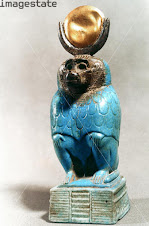







.jpg)


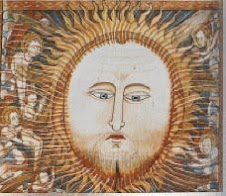












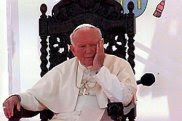



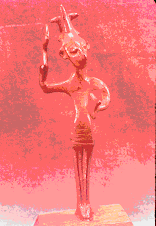





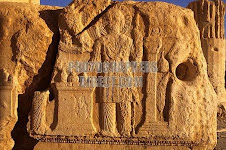
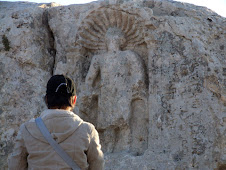



.gif)




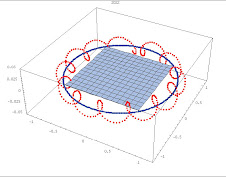


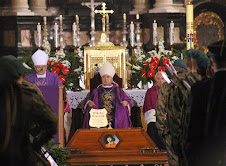

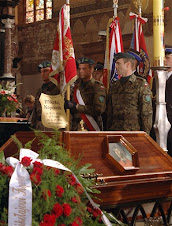






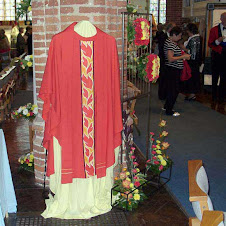


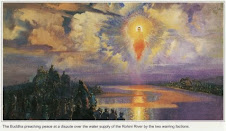


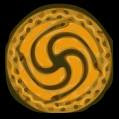










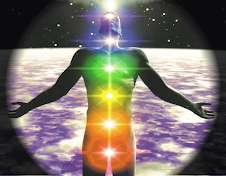


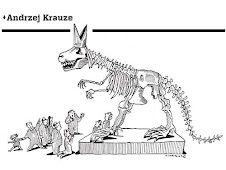

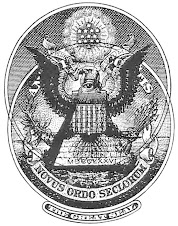




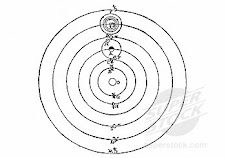

.jpg)








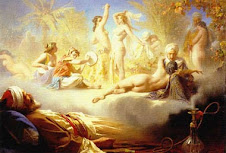
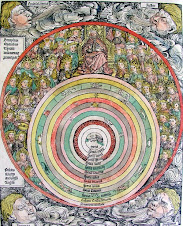





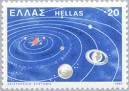








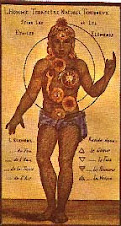


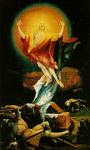

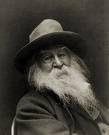






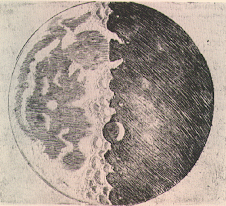


















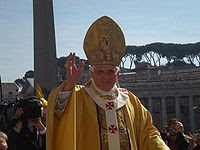
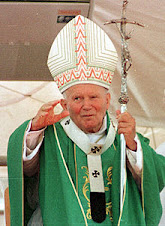
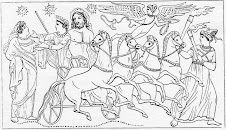





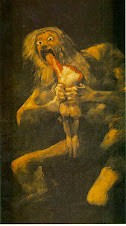





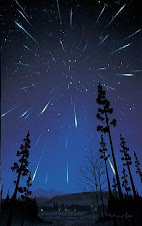







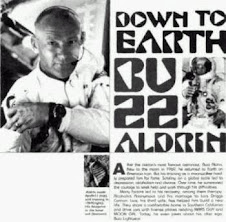
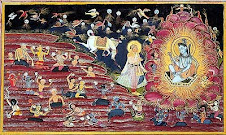


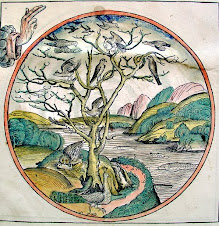




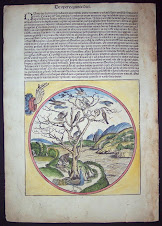







++of+the+Sun+god..jpg)